An acoustic panel test report can look decisive: a standard, a graph, a rating, and several pages of laboratory language. Yet the headline figure is only useful when the tested sample, complete assembly, and installation conditions resemble the project being specified.
I use a simple rule in every review: compare scope before score. That keeps a buyer from turning an NRC report into a promise it never made. It also prevents a common category error—sound absorption is not sound insulation. Absorption data describes how a surface or assembly manages sound energy in a room; it does not establish an STC value or prove transmission loss through a wall.
The five checks below follow a practical PAS sequence: identify the problem, make the commercial risk visible, then resolve it with evidence a supplier and project team can actually submit.
1. Start With the Measurement Method, Not the Headline NRC

Problem. Buyers often open an acoustic panel test report and jump directly to the NRC line. That is understandable, but a single summary value cannot tell me whether the method, frequency data, specimen area, or reporting convention fits the comparison I am trying to make.
Agitation / Answer (Featured Snippet): An NRC report should be read from the test method outward, not from the rating inward. Confirm the cited standard, inspect frequency-by-frequency absorption data, identify the tested specimen and assembly, and record any calculation or rounding notes before comparing one product with another.
Solution. I first identify the method. ISO 354 is a reverberation-room method for measuring sound absorption.1 ASTM C423 also concerns sound absorption and sound absorption coefficients by the reverberation-room method.2 I then separate measured information from a derived summary rating. For a plain-English explanation of the distinction, see NFDecor’s guide to NRC for B2B acoustic panel buyers.
I record:
| Item | Check | Purpose |
|---|---|---|
| Standard and edition | Exact cited method | Avoid false equivalence |
| Frequency results | Bands and omissions | Reveal frequency behavior |
| Specimen identity | Description, dimensions, construction | Define what was tested |
| Date and laboratory | Printed information | Control the document |
| Summary rating | Derivation and presentation | Prevent headline-only comparison |
This reading order also protects the boundary between absorption and insulation. An NRC report is not an STC report. If the project concern is sound passing through a partition, I request evidence designed for that question rather than stretching absorption data beyond its scope.
2. Reconstruct the Tested Assembly: Mounting, Air Gap, and Substrate
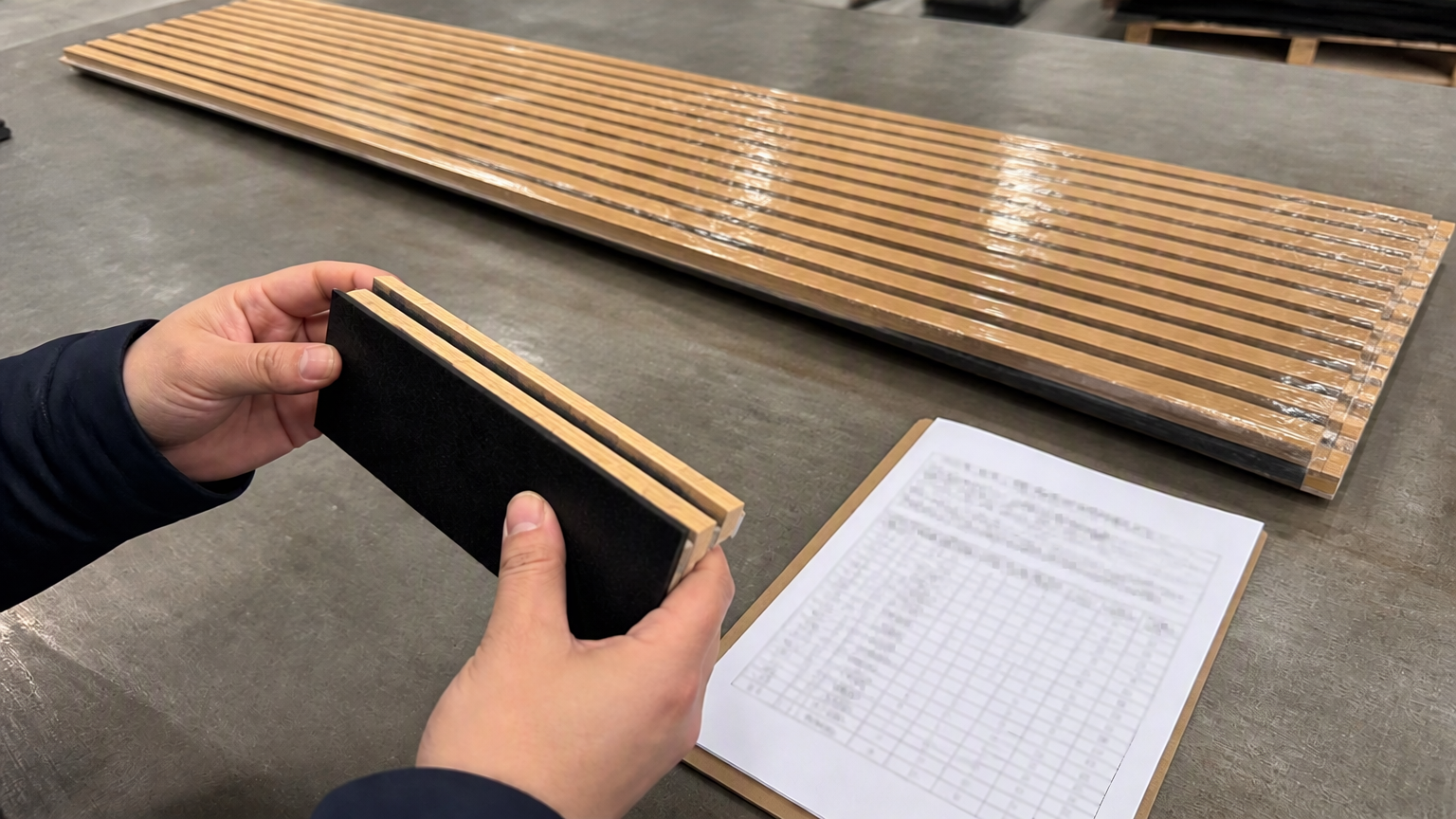
Problem. Two reports can appear to cover similar panels while describing materially different tested assemblies. A direct-fixed sample, a panel mounted over battens, and an installation with an air cavity are not the same configuration, even when their face materials look alike.
Agitation / Answer (Featured Snippet): The tested assembly is the complete configuration placed in the laboratory, including panel construction, mounting method, air gap, backing or infill, substrate, framing, joints, and orientation. Any acoustic result applies to that specimen and assembly—not automatically to every installation using a similar-looking panel.
Solution. I redraw the report as a layer stack. Starting at the room side, I note the visible panel, backing, fasteners or support, cavity depth, any cavity material, and the base substrate. If a layer is unclear, I mark it “not stated” rather than guessing. This is especially important for acoustic panel options, where visual similarity does not establish assembly equivalence.
Use this reconstruction checklist:
- Panel type, face geometry, thickness, dimensions, joints, and orientation
- Mounting method: direct fix, clips, battens, grid, or another stated system
- Air-gap depth and whether the cavity is open or filled
- Backing or infill details and the substrate type
- Edge and perimeter treatment
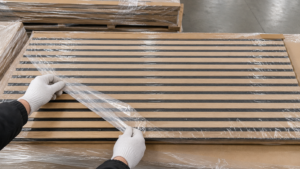
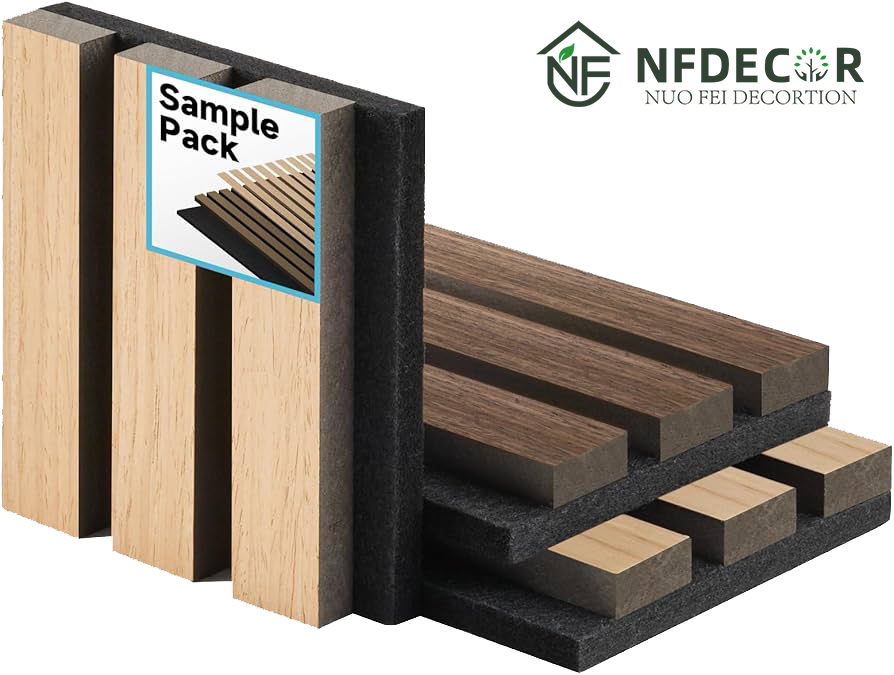
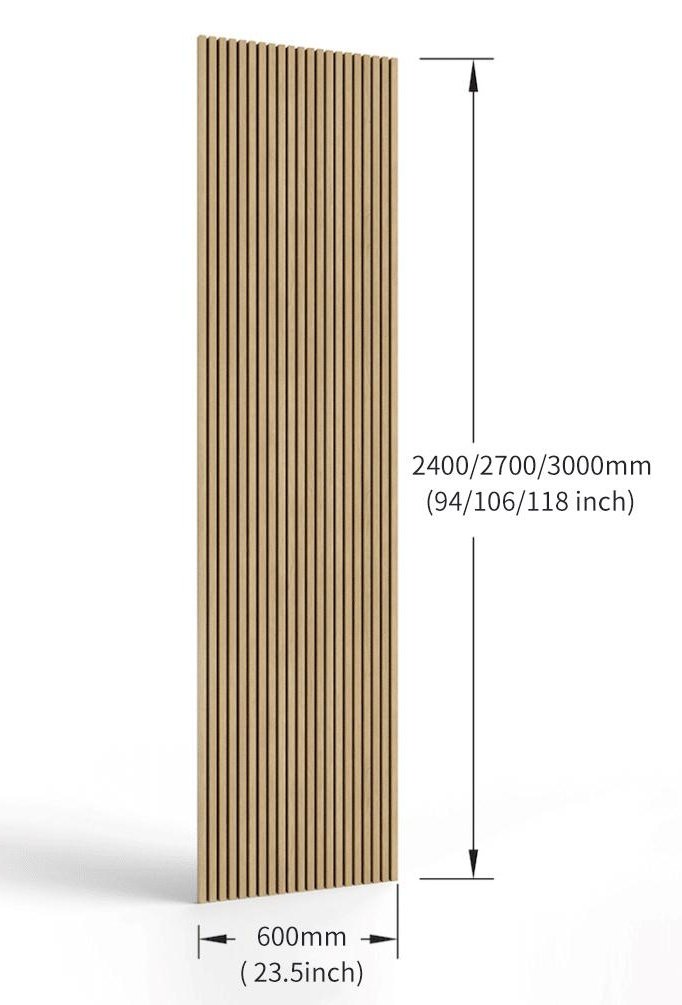
For the NFDecor wood slat panels discussed in this review, the product description should stay factual: straight rectangular veneered lamella strips on continuous black acoustic felt, supplied as an approximately 600 × 2600 mm finished panel with clear protective film over the face. That purchasing description does not replace the exact specimen dimensions and complete assembly stated in the test report.
Only after this reconstruction do I decide whether two reports support a fair comparison.
3. Compare Like With Like Before Selecting a Number

Problem. Procurement tables often place NRC figures side by side as if each came from the same test arrangement. That shortcut can reward a different cavity, backing, substrate, or mounting condition rather than a product difference, creating a weak basis for specification.
Agitation / Answer (Featured Snippet): To compare acoustic reports fairly, normalize the test context first. Put the standard, panel build, mounting method, air gap, cavity infill, substrate, specimen size, and frequency data in one matrix. If a material field differs or is unstated, flag the comparison as conditional rather than ranking headline values.
Solution. I use a “match, differs, or unknown” matrix so uncertainty stays visible.
| Comparison field | Report A vs. Report B | Decision status |
|---|---|---|
| Standard and panel construction | Record both exactly | Match / differs / unknown |
| Mounting and air gap | Record both exactly | Match / differs / unknown |
| Substrate and cavity infill | Record both exactly | Match / differs / unknown |
| Frequency data | Record both sets | Comparable / conditional |
An anonymized specification review. A buyer initially compared only the NRC number from several submissions. When I checked the underlying reports, their installation cavities and complete assemblies were different. The buyer therefore stopped treating the figures as a simple ranking and compared evidence only where the tested assembly and intended project installation conditions aligned. No customer name, location, quantity, or outcome figure is included here.
I also ask what the room needs. A classroom review should connect acoustic evidence with durability, safety, and installation; this school and classroom panel guide shows the broader context.
My rule is conservative: matched context supports comparison; a difference needs technical review; missing information needs clarification.
4. Keep Acoustic Evidence, Fire Scope, and Product Identity Separate
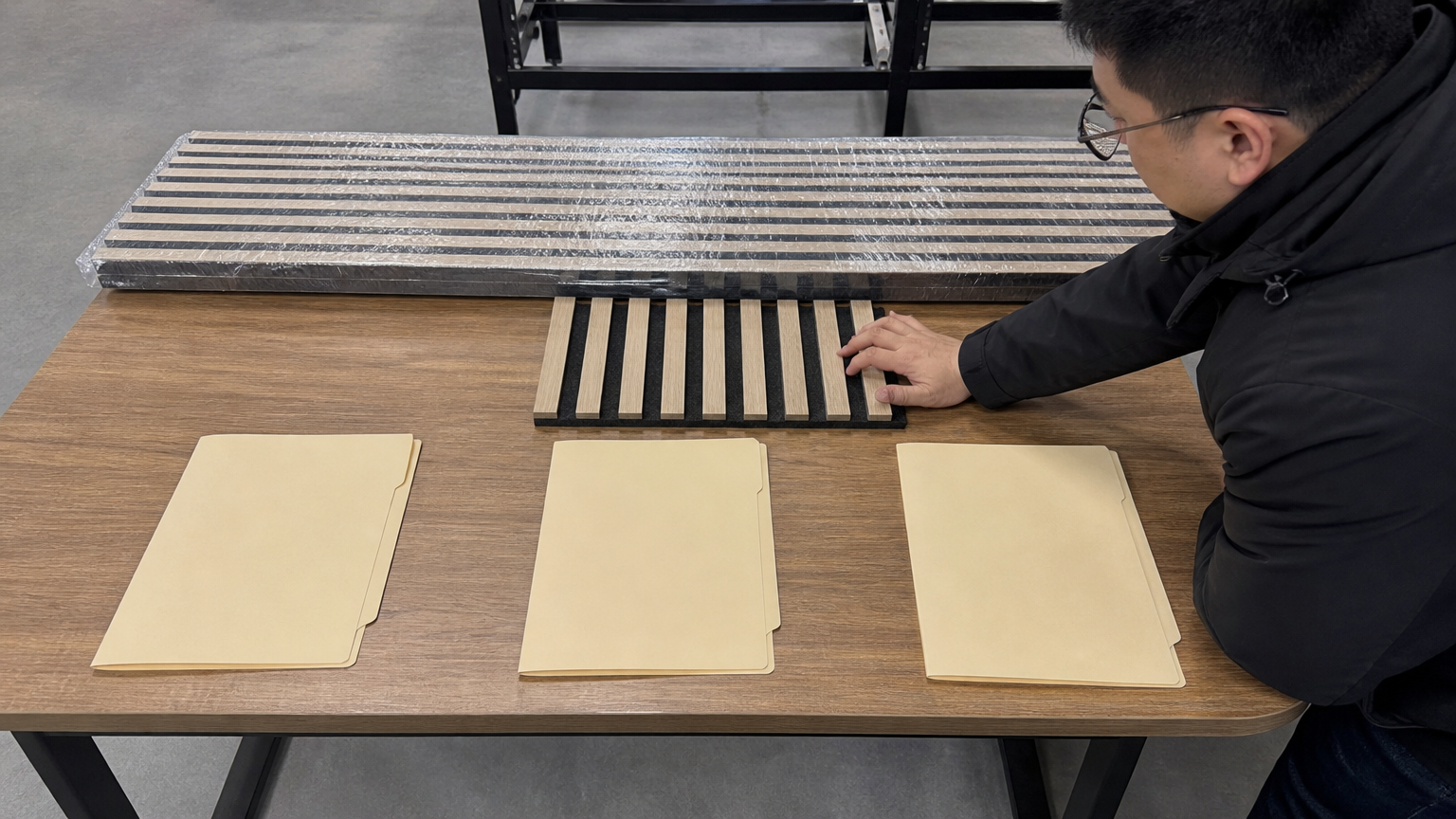
Problem. A submittal may combine an acoustic report, a fire document, and a product data sheet, then imply that every statement applies to every size, finish, backing, and installation. That conclusion is unsafe unless the scope and product identity are traceable across the documents.
Agitation / Answer (Featured Snippet): Acoustic and fire documents answer different questions. Read each report’s specimen description, test method, exclusions, and assembly scope independently, then verify that the proposed product matches those details. A report only applies to its tested specimen and test assembly; appearance, branding, or a shared product-family name is not enough.
Solution. I create three separate evidence lanes and do not let one substitute for another:
| Evidence lane | Question | Scope check |
|---|---|---|
| Acoustic report | How did the assembly absorb sound? | Method, specimen, mounting, cavity, substrate |
| Fire report | How did it respond under the cited method? | Specimen, preparation, assembly, limitations |
| Product identity | What is offered? | Construction, dimensions, finish, backing |
ASTM E84 addresses the surface-burning response of materials, products, or assemblies under controlled conditions.3 I do not convert that into an unstated fire rating, certification, or approval, or extend it to a different backing, finish, substrate, or installation. NFDecor’s overview of acoustic panel certification terminology helps frame questions, but the submitted documents remain decisive.
For sample-to-bulk verification, I use this traceability chain:
- Approved sample code and dated specification
- Construction, dimensions, finish, and felt backing
- Relevant report specimen description
- Purchase order, production reference, and inspection record
A wooden slat acoustic panel manufacturer should map the offered construction to the submitted evidence. This shows what matches, what differs, and what still needs approval.
5. Turn the Review Into a Specification and Submittal Checklist
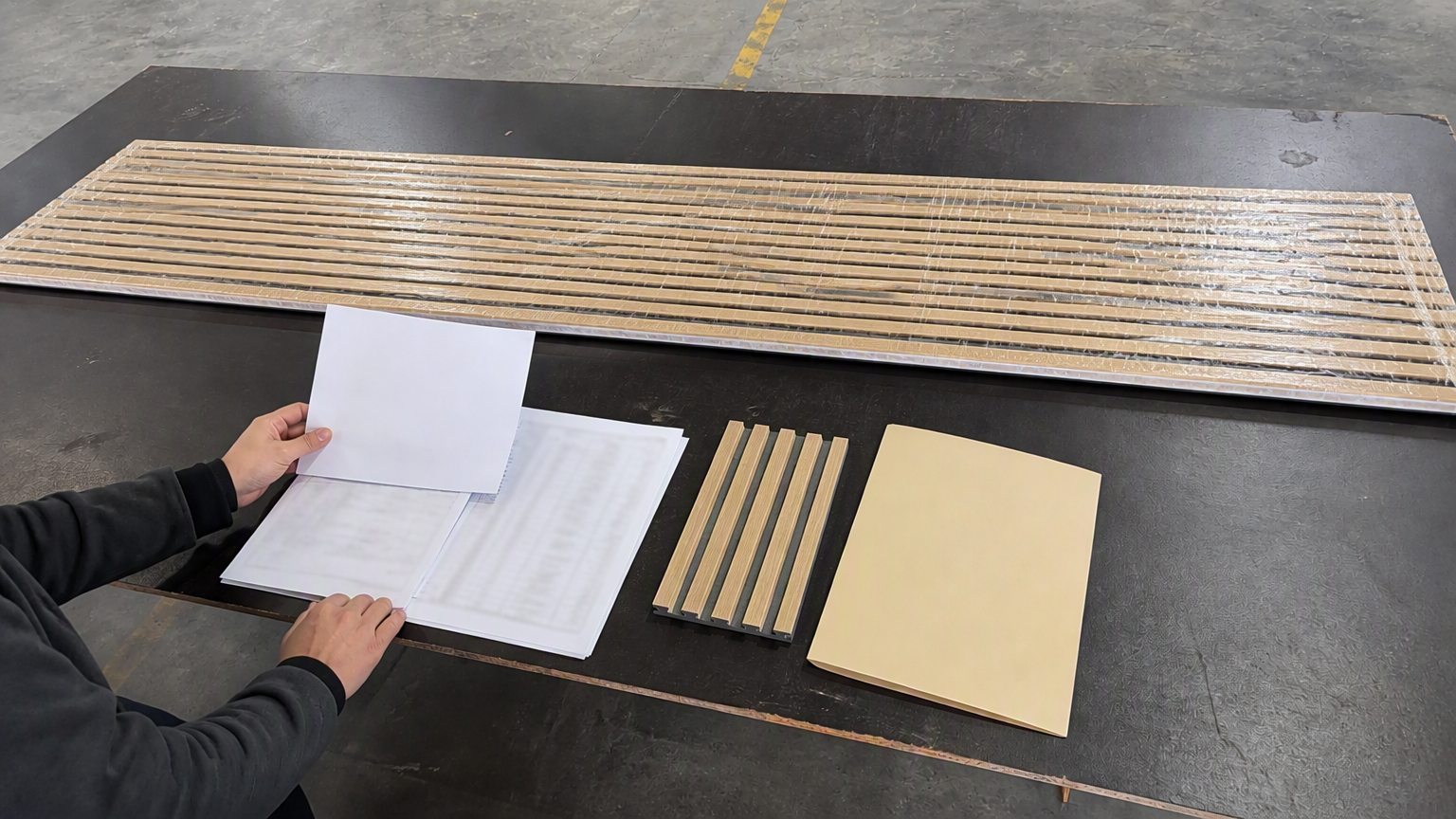
Problem. Even a well-read report can fail at procurement if its critical conditions never reach the specification, quotation, shop drawing, or site instructions. The laboratory assembly then becomes disconnected from the product ordered and the installation built.
Agitation / Answer (Featured Snippet): A project-ready acoustic panel submittal should connect the report to the exact proposed product and installation. Include document identity, specimen construction, panel format, mounting method, air gap, substrate, cavity materials, fire-report scope, approved sample controls, deviations, and responsible approvals in one coordinated checklist.
Solution. I convert the review into acceptance fields, each with a stated value, source document, and owner.
| Field | Required entry | Check |
|---|---|---|
| Acoustic evidence | Report identity and method | Specimen and assembly match |
| Proposed panel | Construction, size, thickness, finish | Data sheet and sample align |
| Installation | Mounting, air gap, infill, substrate | Drawings align |
| Fire evidence | Method and report scope | No unsupported extension |
| Deviations and bulk control | Differences, sample, order, inspection | Approvals and references align |
My final specification/submittal checklist is short enough to use:
- State the acoustic objective without confusing absorption with insulation.
- Name the accepted method and required report content.
- Define assembly conditions that must be matched or reviewed.
- Lock construction, dimensions, thickness, finish, and backing.
- Put mounting, air gap, infill, and substrate on drawings.
- Review fire evidence only within its stated scope.
- Link the sample to ordering, production, and inspection records.
- List deviations and obtain project-team approval.
For the wood slat format, state straight rectangular veneered lamella strips on continuous black acoustic felt, an approximately 600 × 2600 mm finished-panel format, and clear protective film over the face. Record the exact ordered construction separately, and do not add an unverified thickness, NRC, STC, fire classification, report number, or certification.
Frequently Asked Questions
1. Is an NRC report proof of sound insulation?
No. NRC relates to sound absorption information derived from a relevant report; it does not establish STC or prove how much sound passes through a wall or partition.
2. Can I compare NRC values from different mounting methods?
Only conditionally. First compare the complete tested assemblies, especially mounting method, air gap, cavity material, and substrate. Differences can make a headline-only ranking misleading.
3. What if the acoustic panel test report does not name the substrate?
Record the substrate as “not stated,” ask for clarification, and avoid assuming the result represents the planned installation. Missing scope is a review issue, not permission to guess.
4. Does a fire report cover every finish and backing?
Not automatically. Read the specimen and assembly description, method, preparation, and limitations. Any report applies only to the specimen and test assembly within its documented scope.
5. How do I verify that bulk panels match the approved sample?
Use traceable identifiers for the sample, construction, dimensions, finish, backing, purchase order, production reference, and inspection record. Log deviations and route them for project approval.
Project-ready next step: Contact NFDecor with your intended panel build, installation detail, and document checklist so the requested submittal scope is clear.
References
- International Organization for Standardization, ISO 354:2003 Acoustics — Measurement of sound absorption in a reverberation room, https://www.iso.org/standard/34545.html.
- ASTM International, ASTM C423-22: Standard Test Method for Sound Absorption and Sound Absorption Coefficients by the Reverberation Room Method, https://www.astm.org/c0423-22.html.
- ASTM International, ASTM E84-21a: Standard Test Method for Surface Burning Characteristics of Building Materials, https://store.astm.org/e0084-21a.html.