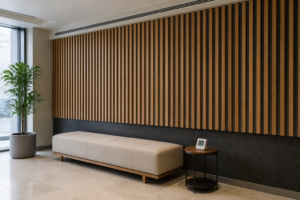
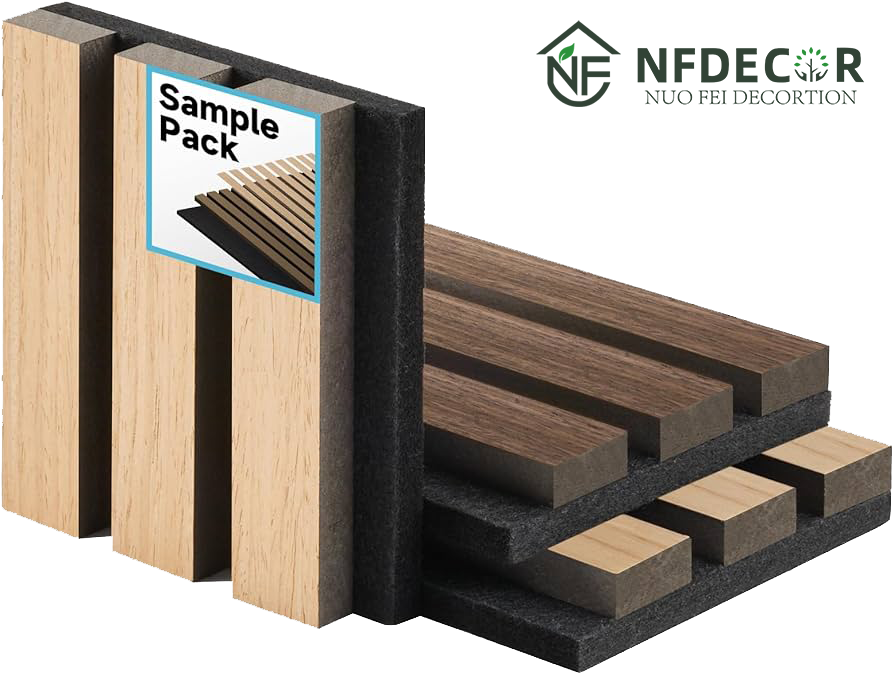
PET felt and wood slat acoustic panels are both sound-absorbing finishes, but they suit different spaces. PET felt panels offer flexible colours, custom shapes and a softer visual surface, which helps in offices, classrooms and rooms with curved or irregular walls. Wood slat acoustic panels suit projects that need a linear architectural rhythm and a wood-led finish, and they work well as a feature wall. Start from the acoustic task and the installed assembly, then compare model-specific test reports, fire documentation, maintenance needs and supply conditions. For the related comparison, see wood slat panels vs acoustic foam.
PET felt panels generally suit spaces that need flexible colors, custom shapes, softer visual surfaces, or broad design freedom. Wood slat acoustic panels suit spaces that call for linear architectural rhythm and a wood-led finish. However, we recommend choosing between them only after comparing model-specific acoustic tests, installation assemblies, fire documents, maintenance needs, and supply conditions.
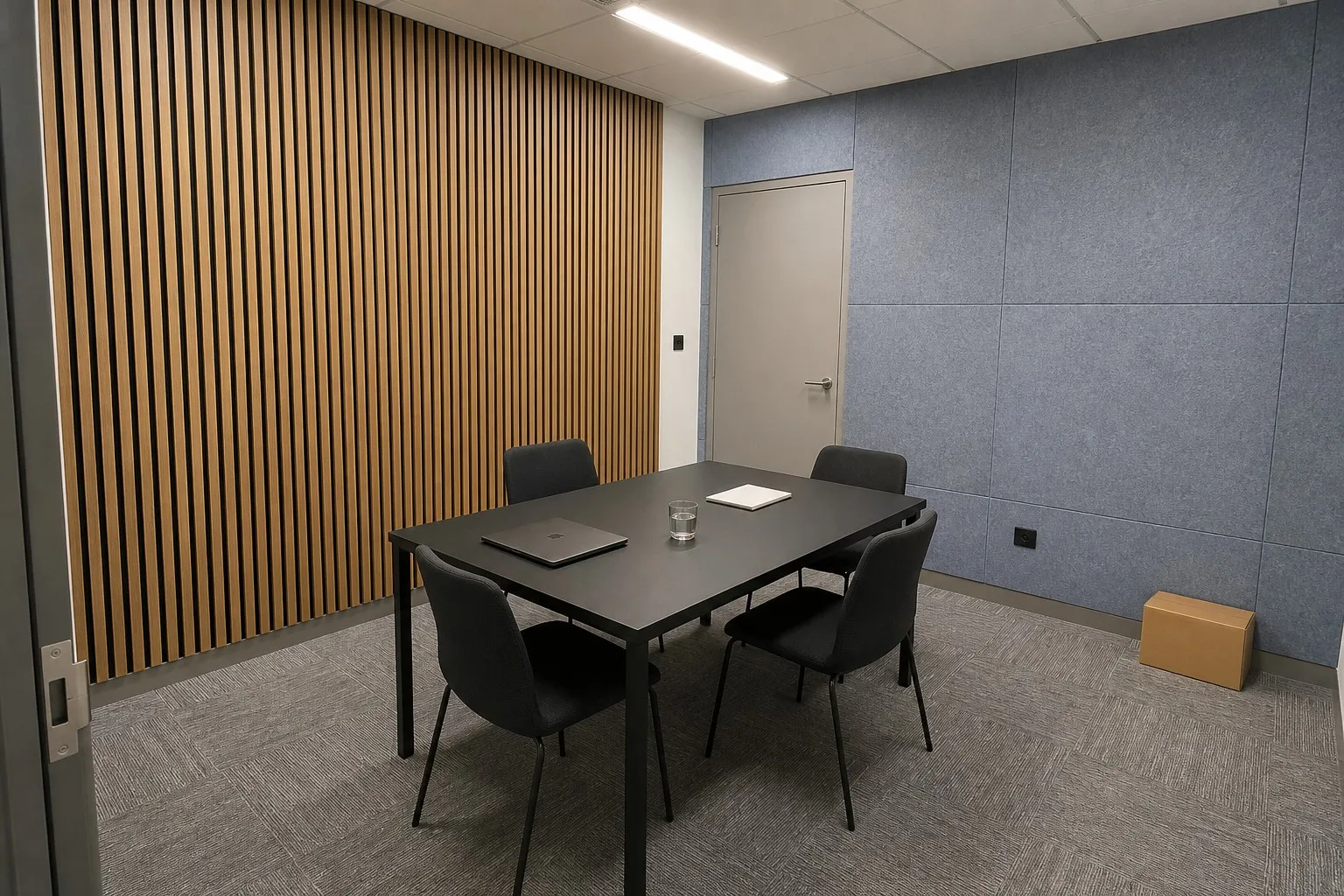
The office buyer eventually shortlisted both materials for different zones rather than forcing one product across the project. We did not verify the completed room performance, so we do not claim a measured result. Still, the selection process illustrates a useful point: space type starts the discussion, but project conditions make the decision.
What Acoustic Problem Should PET Felt vs Wood Slat Acoustic Panels Solve?
A buyer can compare attractive samples for weeks and still choose the wrong product if the acoustic task remains unclear. This problem becomes expensive when an absorption panel is expected to stop sound passing through a wall. We always begin by separating reverberation control1 from sound isolation.
PET felt and wood slat acoustic panels mainly help manage reflections and reverberation inside a room2 when they are used as tested and specified. They are not complete soundproofing systems. If a project must prevent speech, music, or equipment noise from reaching adjacent spaces, we recommend an assessment of the full wall, floor, ceiling, door, glazing, and service-penetration assembly.
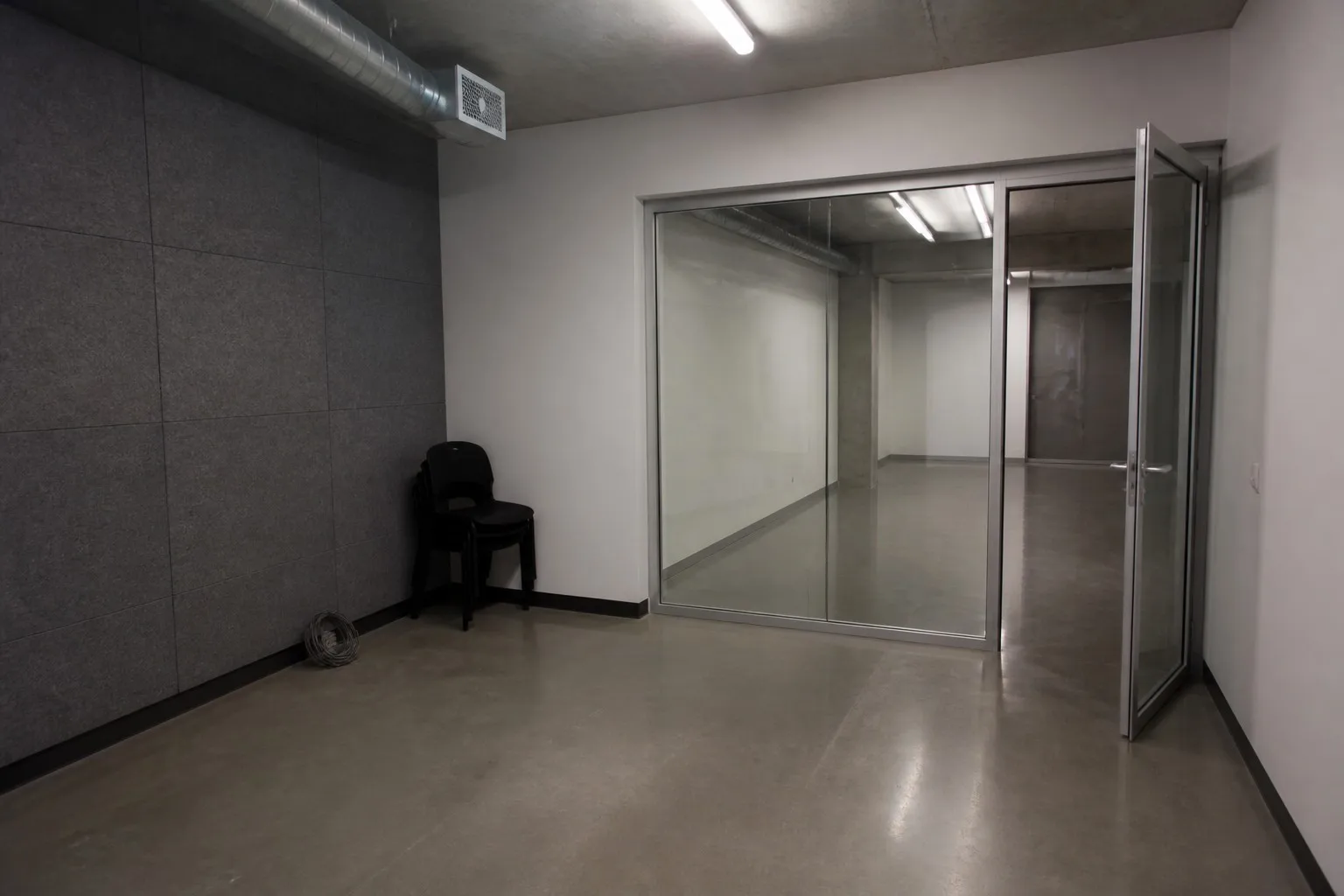
Room Absorption and Sound Isolation Are Different Tasks
I often see the word “acoustic” used as if it means “soundproof.” In specification work, that shortcut creates risk.
Sound absorption concerns sound energy reflected within a room. Excessive reflections can contribute to long reverberation, poor speech clarity, and an uncomfortable noise build-up.3 Absorptive wall or ceiling treatments can form part of the response.
Sound isolation concerns sound traveling from one space to another. The solution may involve:
- Wall or ceiling mass4
- Decoupled construction
- Insulation inside cavities
- Sealed perimeter joints
- Acoustic doors or glazing
- Treatment of ventilation paths
- Control of flanking transmission
Neither a decorative PET felt sheet nor a wood slat panel should automatically be treated as a substitute for that complete construction.
We Define the Room Requirement First
Before we recommend samples, we ask buyers to document the actual issue:
-
What activity takes place in the room?
A video meeting room, restaurant, hotel lobby, classroom, and retail store can have very different sound sources and occupancy patterns. -
Where are the dominant reflective surfaces?
Glass, concrete, plasterboard, stone, and hard ceilings may affect the treatment plan. -
Is the concern inside the room or between rooms?
This question separates absorption work from isolation work. -
How much surface area can the design allocate?
A small decorative feature area may not produce the same effect as broader planned coverage. -
Can the design use walls, ceilings, suspended elements, or more than one treatment?
The available mounting locations can change which product format is practical. -
Will a qualified acoustic consultant review the project?
We recommend professional evaluation for spaces with formal performance targets.
We treat the room name as context, not as the specification. Two meeting rooms can require different products because their dimensions, finishes, occupancy, and installation assemblies differ.
How Should Buyers Compare PET Felt vs Wood Slat Acoustic Panels?
Headline performance values can look simple, but they may hide differences in thickness, backing, air cavities, mounting methods, and tested coverage. A buyer who compares isolated marketing numbers may approve the wrong construction. We therefore compare documented assemblies, not just panel names or an unsupported NRC claim.
Buyers should compare PET felt and wood slat acoustic panels using test reports tied to the exact model, thickness, construction, substrate, and mounting arrangement under consideration. They should also verify fire and environmental documents separately. A report for another product family, backing material, or installation method may not support the proposed specification.

Why the Installation Assembly Matters
A wood slat acoustic panel usually combines several elements. A typical format may include decorative lamella strips attached to an acoustic felt backing. Some installations place the panel directly against a substrate, while others may use battens, a cavity, or additional absorptive material.
A PET felt product can also vary considerably. Buyers may encounter flat wall sheets, engraved panels, baffles, suspended clouds, geometric tiles, or shaped decorative elements. Thickness, density, spacing, air gaps, and installation orientation can all matter.5
For that reason, we ask buyers to confirm whether the test sample represents the intended site assembly.
| Evaluation item | What we ask the supplier to identify | Why it matters |
|---|---|---|
| Exact product model | Model number and product description | Similar-looking products may use different materials |
| Panel dimensions | Width, length, and thickness | Dimensions can affect layout, joints, and installation |
| Material construction | Felt composition, slats, core, veneer, film, or coating | Construction must match the quoted product |
| Mounting method | Direct fixing, battens, cavity, suspension, or another method | The tested mounting may differ from the site plan |
| Test standard | Standard named on the full report | Buyers need a recognized basis for comparison |
| Report holder | Company and manufacturing source shown | The document should relate to the proposed supply |
| Tested result | Result and applicable frequencies or classification | A headline number does not show the full context |
| Date and scope | Report date, sample details, and limitations | Buyers should identify expired or irrelevant documents |
NRC Should Not Stand Alone
NRC, or Noise Reduction Coefficient, is commonly used as a compact absorption indicator in some markets.6 However, we do not treat one NRC value as a universal product score. A value should be read together with the underlying report and tested configuration.7
I recommend asking these questions:
- Was the exact panel construction tested?
- Did the sample include an air cavity or extra insulation?
- Was the product installed directly on a rigid surface?
- Does the report show frequency-specific absorption data?
- Does the laboratory information meet the project reviewer’s requirements?
- Does the proposed site installation reproduce the tested assembly?
- Is the claimed result taken from a full report or only a sales sheet?
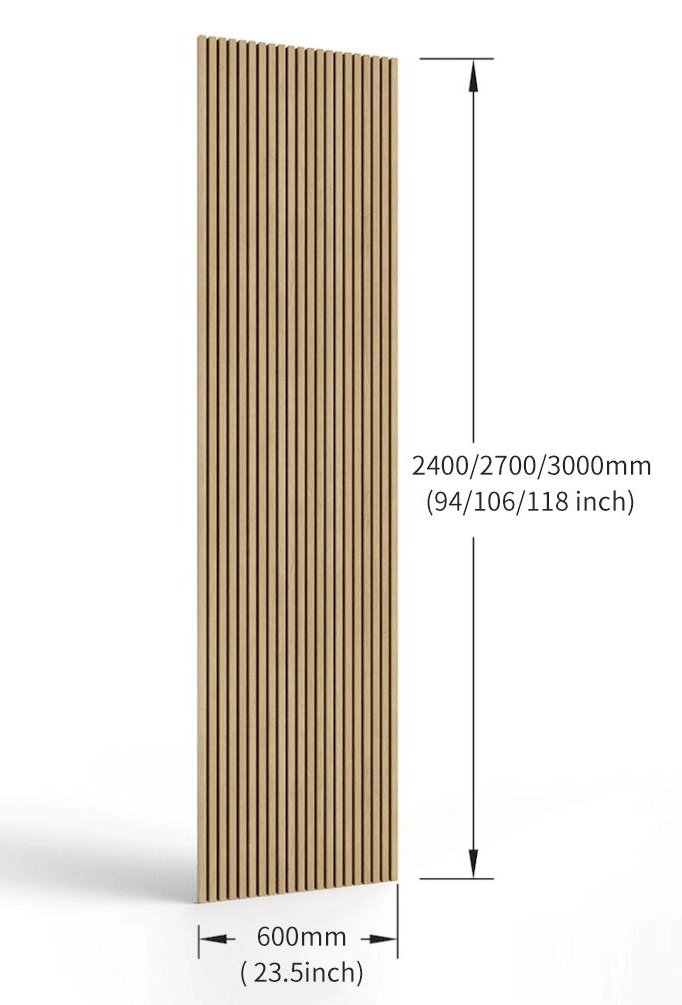
NF Decor offers standard wood slat formats such as 600 mm widths, 2400/2700/3000 mm lengths, and 21 mm or 18 mm panel constructions, subject to the selected model. Buyers should still match any requested performance documentation to the exact construction quoted.
We apply the same caution to PET felt. A test for one thickness, density, or suspended system should not automatically be applied to every PET product.
When Do PET Felt Acoustic Panels Fit a Space?
Some projects need color, graphic freedom, and softer-looking surfaces, but buyers can still make the mistake of selecting PET felt from appearance alone. Cleaning access, impact exposure, edge details, fire requirements, and installation tolerances may change the choice. We use physical samples and model-specific documents to narrow the options.
PET felt acoustic panels can fit projects that prioritize custom colors, geometric forms, engraved patterns, suspended elements, or a softer visual language. They may work across offices, education spaces, hospitality interiors, and retail environments, but no room category guarantees suitability. Buyers should evaluate the exact panel format, coverage, mounting method, maintenance plan, and compliance documentation.
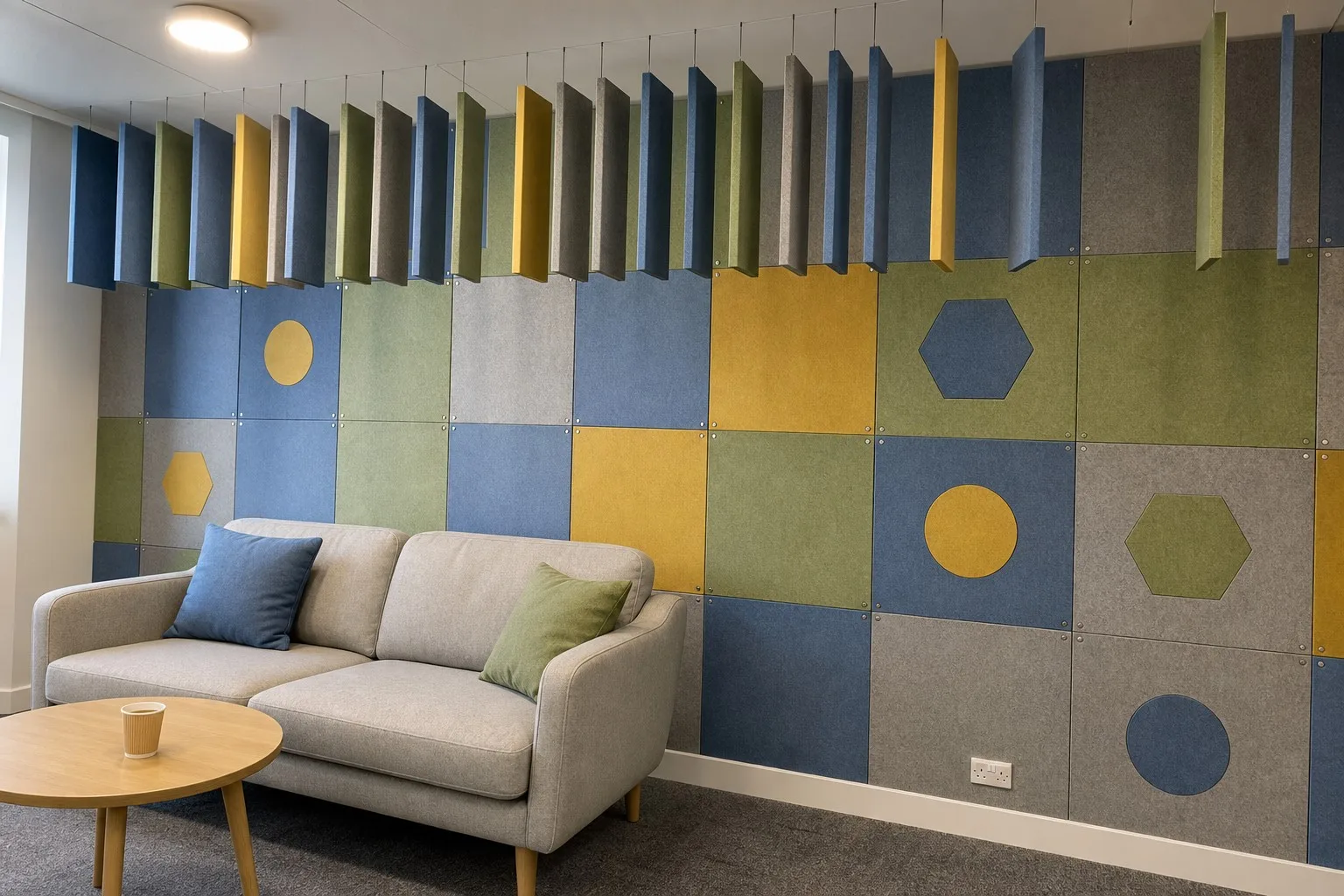
Where PET Felt Provides Useful Design Freedom
PET felt can support many visual formats. Designers may specify simple wall tiles, large-format panels, cut shapes, pinboard-style surfaces, ceiling baffles, or suspended clouds. This flexibility can help when the acoustic treatment needs to become part of a brand or wayfinding concept.
In our pre-sales discussions, PET felt often enters the shortlist when a buyer wants:
- Broad color coordination with furniture or brand palettes
- Curved, cut, or geometric shapes
- Layered wall compositions
- Ceiling baffles or clouds
- A soft, textile-like appearance
- Visual zoning in open areas
- Custom patterns for private-label collections
However, we do not assume that every color, thickness, or shape has identical performance. A heavily cut design may create different coverage from a full sheet.8 A suspended baffle system may also require specific spacing and fixing details. Buyers should ask for documents that represent the proposed product and assembly.
What Buyers Should Check Before Specifying PET Felt
PET felt selection requires more than choosing a color from a digital chart. I recommend checking the following details with physical samples:
-
Color under project lighting
Screen colors can mislead buyers. Daylight, warm lighting, and cool commercial lighting can make the same felt appear different.9 -
Surface and edge quality
Cut edges, bevels, engraving, joints, and visible fixing points influence the finished appearance. -
Cleaning method
Buyers should define expected dust, fingerprints, food exposure, or public contact. They should request supplier cleaning guidance and test it on a sample. -
Impact and touch exposure
A panel installed behind seating faces different conditions from one installed in a low-contact ceiling area. -
Batch consistency
Large projects and later replenishment can reveal shade variation. Buyers should agree on color tolerances, batch approval, and reserve quantities. -
Fire and environmental requirements
The buyer should verify the exact model’s current reports, certificate scope, issuing body, and relevance to the destination market. -
Installation precision
Complex shapes require accurate setting-out. Installers may also need templates, numbered pieces, or shop drawings.
PET felt is not automatically cheaper, easier, safer, or more sustainable than wood slat panels. Those conclusions depend on the product, order size, fabrication, transport volume, labor, documentation, and local requirements.
When Do Wood Slat Acoustic Panels Fit a Space?
A wood-led wall can make a strong architectural statement, but appearance can distract from practical questions. Buyers may overlook veneer matching, slat spacing, backing construction, corner details, and replacement planning. We help buyers evaluate the complete decorative and acoustic assembly before approving a finish.
Wood slat acoustic panels can fit spaces that need linear rhythm, visual warmth, and coordination with timber-led interior materials. They are commonly considered for offices, hotels, restaurants, retail stores, residential developments, and public interiors. Their suitability still depends on the tested assembly, required coverage, finish durability, installation plan, documentation, and batch-control process.
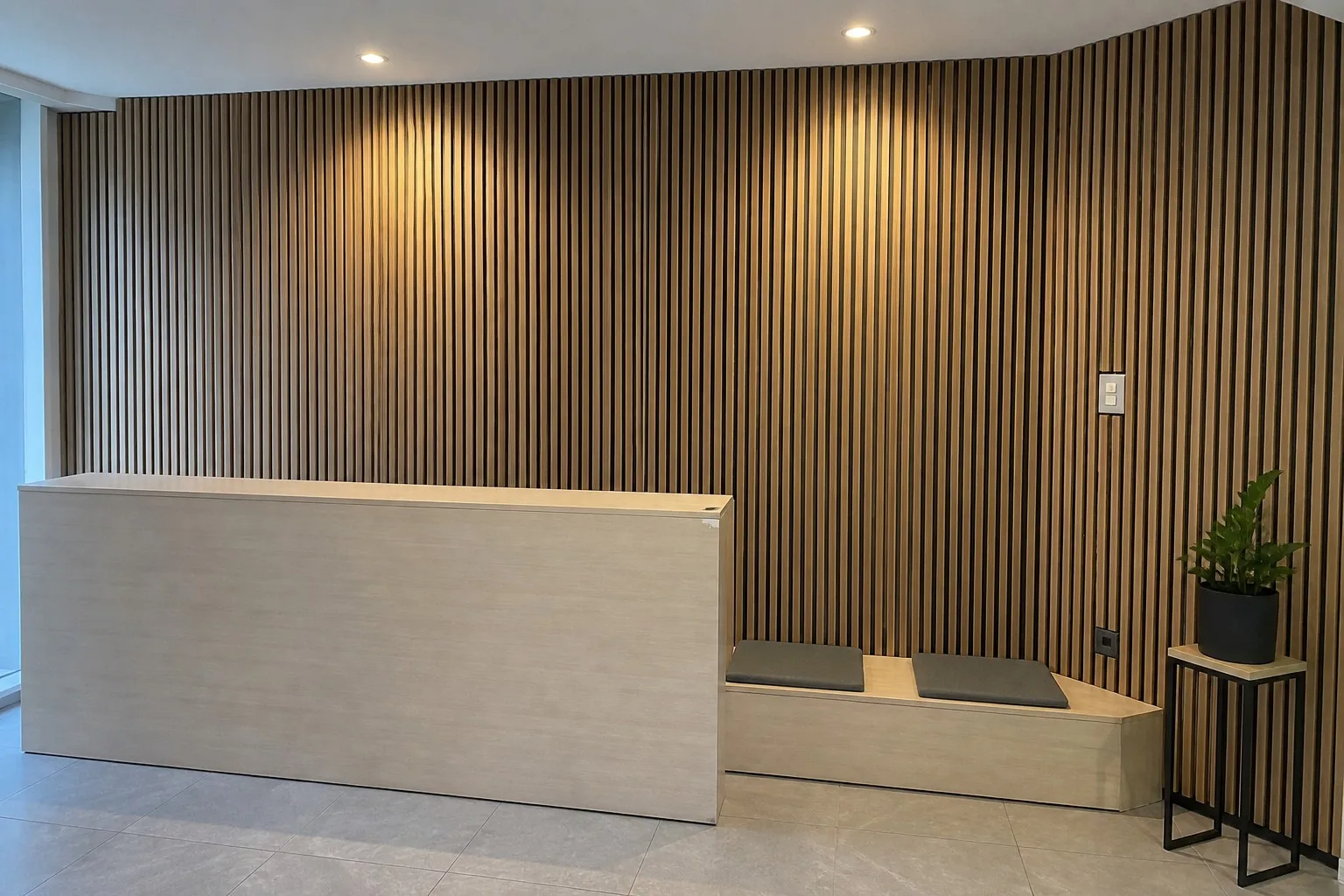
Wood Slats Create a Distinct Architectural Language
Wood slat panels create repeated vertical, horizontal, or diagonal lines. Designers can use that rhythm to make walls appear taller, guide movement, frame reception areas, or connect wall and ceiling surfaces.
At NF Decor, we manufacture wood slat acoustic panels with lamella strips and felt backing. We offer natural wood veneer, engineered or reconstituted veneer, and PVC film finishes, depending on the product and project requirements.
Each finish family supports a different procurement goal:
| Finish family | Typical reason for selection | Main point to verify |
|---|---|---|
| Natural wood veneer10 | Natural grain variation and material character | Approved variation range and batch matching |
| Engineered veneer | Greater repeatability across larger quantities | Reference sample and replenishment consistency |
| PVC film | Broad wood-grain, solid, matte, gloss, or textured options | Film specification, surface durability, and project acceptance |
Popular veneer references in our range include Thai Teak, Smoke Walnut, Brazil Rosewood, American Oak, Smoke Oak, NF Walnut, Gray Rosewood, and Charcoal Oak. These names should function as finish references rather than universal color standards. We advise buyers to approve physical samples because timber character, lighting, production batches, and screen settings can change visual perception.
Details That Affect the Finished Installation
A flat sample does not show every site condition. We ask project teams to review:
- Slat width and spacing
- Panel thickness and format
- Horizontal or vertical orientation
- Joint alignment between panels
- Inside and outside corners
- Cut edges around sockets and switches
- Door, ceiling, and skirting transitions
- Fixing method and substrate condition
- Access panels and service openings
- Cutting tools and installer experience
Wood slat panels are not automatically harder or easier to install than PET felt. A simple, full-height wall may be efficient to set out, while a wall with many outlets, corners, and openings may require careful cutting. A shaped PET felt composition can also involve significant layout work. We therefore compare the actual drawing and labor plan instead of relying on a material stereotype.
Finish replenishment deserves equal attention. For multi-phase developments, buyers should record the approved finish code, panel construction, production batch, and retained control sample. They may also consider ordering spare material, especially when natural veneer variation is part of the design.
How Can Buyers Reduce PET Felt vs Wood Slat Acoustic Panel Procurement Risk?
A visually approved sample can still lead to rework if the quote, report, shipment, and installed product do not match. This risk grows across large projects and international supply chains. We reduce uncertainty by turning the design choice into a documented procurement process before mass production begins.
Buyers can reduce risk by issuing a clear specification, checking model-specific reports, approving physical samples, reviewing installation drawings, and defining batch tolerances. They should also compare total project cost rather than panel price alone. A sound procurement plan covers production, packaging, shipping, labor, wastage, compliance review, replacement stock, and future replenishment.
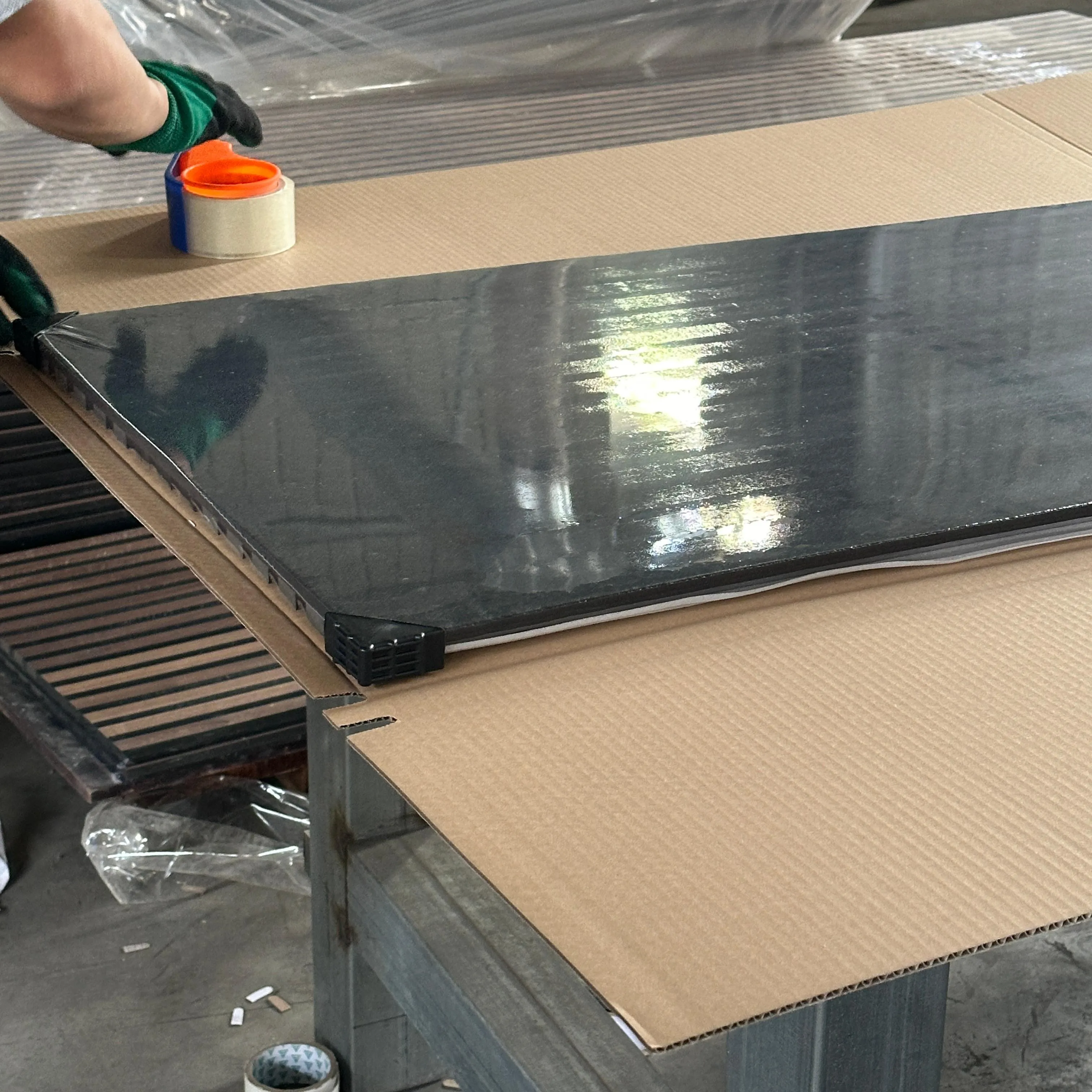
Use a Controlled Sample Process
I recommend using at least three sample stages for a significant project:
-
Initial material samples
The team compares colors, textures, thicknesses, backing, and general construction. -
Project-specific approval sample
The supplier prepares the selected finish and construction, including custom color matching when required. -
Pre-production control sample
The buyer and supplier retain matching signed or coded references for production inspection.
A small sample cannot prove whole-project acoustic performance. However, it can help control color, surface, edge quality, slat arrangement, and workmanship. A mock-up can provide more information when the project contains complex corners, joints, lighting, or ceiling transitions.
Compare Total Procurement Conditions
The lowest unit quote may not create the lowest installed cost.11 Buyers should include:
- Minimum order quantity
- Sample and development charges
- Custom cutting or color-matching costs
- Production lead time
- Packaging method
- Container loading efficiency
- Expected site wastage
- Local installation labor
- Required trims and accessories
- Inspection arrangements
- Spare material
- Replenishment terms
- Claim and replacement procedures
For overseas orders, packaging deserves special attention. Long panels need suitable edge and face protection. Buyers should also confirm pallet or carton dimensions, container plans, unloading conditions, and storage requirements before shipment.
Verify the Supplier as Well as the Product
NF Decor was established in 1995 and operates its own factory in Shijiazhuang, Hebei. We run five production lines with stated monthly capacity above 50,000 square meters, and we support B2B wholesale, OEM, and ODM orders. We also state ISO and FSC certification within our business documentation.
However, buyers should not rely on a blog statement alone. We recommend that procurement teams request and verify:
- Current certificates and their scope
- Company name and manufacturing address
- Validity dates
- Product or material coverage
- Relevant chain-of-custody information
- Model-specific test reports
- Quality-control procedures
- Production capacity for the required schedule
- Batch traceability
- Inspection and defect-handling processes
Fire classifications also require careful review. A general claim such as “Class B1” may be incomplete without the test standard, product construction, substrate, mounting method, and report scope.12 The project’s architect, code consultant, fire professional, or authority having jurisdiction should confirm acceptance.
Frequently Asked Questions
Are PET felt panels better at sound absorption than wood slat panels?
Neither material is automatically better. Absorption depends on the exact construction, thickness, backing, coverage, air cavity, mounting method, and test setup. We recommend comparing full model-specific test reports for assemblies that closely match the intended installation instead of comparing unsupported headline NRC values.
Can PET felt or wood slat acoustic panels soundproof a room?
These panels primarily support room absorption and reverberation control. They do not form a complete sound-isolation system by themselves. A soundproofing plan may require mass, decoupling, insulation, airtight construction, acoustic doors, glazing, and treatment of flanking paths. We recommend qualified acoustic evaluation for isolation targets.
Which panel is better for an office?
The office label does not determine the answer. PET felt may suit colorful zoning, shaped wall features, or suspended elements. Wood slat panels may suit reception areas and wood-led meeting rooms. The team should decide based on the room’s acoustic task, visual intent, installation conditions, maintenance, documents, and budget.
Which option is easier to maintain?
Maintenance depends on the finish and exposure. Buyers should assess dust, touching, impact, stains, cleaning products, and access. We recommend requesting written care guidance and testing the proposed cleaning method on an approved sample. Neither PET felt nor wood slat panels are universally easier to maintain.
Should distributors stock PET felt or wood slat acoustic panels?
Distributors should study their customer mix, local design preferences, required certifications, warehouse capacity, order frequency, and color demand. Engineered veneer or selected film finishes may help with repeatability, while PET felt can support broader color and shape programs. A focused sample collection is often safer than excessive initial stock.
Conclusion
The choice between PET felt vs wood slat acoustic panels should begin with the real acoustic task, not a universal product ranking. PET felt can support color, shapes, and softer design concepts, while wood slat panels can provide linear rhythm and a wood-led architectural finish. In both cases, buyers should verify tested assemblies, fire and environmental documents, maintenance needs, installation details, batch consistency, and total procurement cost.
Contact NF Decor to request B2B samples, model-specific documents, finish options, OEM support, or a project quotation for your next acoustic-panel specification.
Related technical guides
- Wooden Slat Acoustic Panels: What Every Specifier and Designer Must Know
- How to Choose the Best Wood Acoustic Panels for Your Project?
"Assessing the Acoustic Characteristics of Rooms: A Tutorial ... - PMC", https://pmc.ncbi.nlm.nih.gov/articles/PMC6375510/. Room-acoustic absorption treatments reduce reflected sound and reverberation within an enclosure, whereas sound isolation concerns limiting transmission of sound between adjoining spaces. Evidence role: definition; source type: education. Supports: Authoritative definitions distinguishing control of reflected sound within a room from reduction of sound transmission between spaces.. ↩
"Acoustics Lecture 4 - Cornell University Ergonomics Web", https://ergo.human.cornell.edu/studentdownloads/DEA3500notes/Acoustics/Acoustics4.html. Sound-absorbing finishes are used to reduce reflected sound in rooms; they do not by themselves establish the sound-insulation performance of a separating wall or ceiling assembly. Evidence role: mechanism; source type: government. Supports: Absorptive interior treatments principally reduce reflected acoustic energy in a room, while transmission control requires a building assembly designed for sound insulation.. Scope note: The extent of absorption and any incidental transmission benefit depend on the specific product and installation. ↩
"Effect of reverberation on speech intelligibility, logatom test “in situ”", https://www.academia.edu/122205256/Effect_of_reverberation_on_speech_intelligibility_logatom_test_in_situ_. Excessive reverberation can degrade speech intelligibility because delayed reflected sound overlaps with direct speech and reduces temporal and spectral clarity. Evidence role: mechanism; source type: institution. Supports: Research relating reverberation time and reflected sound to speech intelligibility or speech clarity in occupied rooms.. Scope note: Perceived acoustic comfort also depends on room use, background noise, listener position, and the speech signal. ↩
"[PDF] new construction acoustical design guide - City of High Point", https://www.highpointnc.gov/DocumentCenter/View/1103/Wyle-New-Construction-Acoustical-Design-Guide-April-2003-PDF?bidId=. Sound isolation between spaces is governed by the performance of the complete assembly, including surface mass, structural connections, cavity treatment, airtightness, and flanking transmission paths. Evidence role: mechanism; source type: research. Supports: Building-acoustics guidance explaining the role of mass, decoupling, cavity insulation, airtightness, and flanking paths in sound isolation.. Scope note: The relative importance of each measure varies with the wall, floor, or ceiling construction and frequency range. ↩
"(DOC) A preliminary study of effect of air gap on sound absorption of ...", https://www.academia.edu/1559344/A_preliminary_study_of_effect_of_air_gap_on_sound_absorption_of_natural_coir_fiber. For porous sound absorbers, absorption is affected by material thickness and airflow resistance as well as by the air space and geometry behind or around the treatment, particularly across different frequency ranges. Evidence role: mechanism; source type: paper. Supports: Experimental or theoretical evidence that porous absorber thickness, density or flow resistance, air gaps, and geometry influence sound absorption.. Scope note: Results for a particular PET-felt product cannot be inferred solely from general porous-absorber studies. ↩
"Noise reduction coefficient - Wikipedia", https://en.wikipedia.org/wiki/Noise_reduction_coefficient. Noise Reduction Coefficient (NRC) is a single-number sound-absorption rating derived from laboratory absorption measurements at specified frequency bands. Evidence role: definition; source type: institution. Supports: The definition of NRC as a single-number rating derived from measured sound-absorption coefficients under the applicable test method.. Scope note: NRC condenses frequency-dependent test data and is not a complete descriptor of performance in every room or installation. ↩
"[PDF] ACOUSTIC ABSORPTION OF STRUCTURAL MEMBRANES", https://upcommons.upc.edu/bitstreams/502601a9-62d2-4307-984c-b201c751d240/download. Laboratory absorption results are conditional on the tested specimen and mounting arrangement; backing, air cavities, and installation geometry can alter the measured frequency-dependent absorption and resulting single-number rating. Evidence role: mechanism; source type: paper. Supports: Evidence that measured absorption coefficients and single-number ratings vary with specimen mounting, air space, backing, and test configuration.. Scope note: A laboratory configuration may approximate but does not necessarily reproduce the completed site installation. ↩
"Acoustic Panel Procurement: From Room Goals to Approved ...", https://blogs.bu.edu/kongta/acoustic-panel-procurement-guide/. The total absorption contributed by a treatment depends on its effective exposed area and absorption characteristics, so changes in panel coverage or geometry can change the room-level acoustic contribution. Evidence role: mechanism; source type: research. Supports: Research showing that effective absorbing area and surface geometry influence the total equivalent absorption provided in a room.. Scope note: The acoustic effect of a particular cut pattern must be determined from its own tested or modeled configuration. ↩
"[PDF] A Rational Methodology for Estimating the Luminous Flux Based ...", https://nvlpubs.nist.gov/nistpubs/Legacy/IR/nistir6657.pdf. The apparent color of a material depends on the spectral properties of the illuminant and viewing conditions, so the same surface can appear different under different light sources. Evidence role: mechanism; source type: institution. Supports: Color-science evidence that perceived object color depends on illumination, observer response, and viewing conditions.. Scope note: Individual perception and surrounding colors also affect color appearance. ↩
"[PDF] Characteristics and Availability of Commercially Important Woods", https://research.fs.usda.gov/download/treesearch/7141.pdf. Natural wood products exhibit inherent variation in grain, color, and figure arising from species, growth conditions, and the portion of the log from which veneer is cut. Evidence role: general_support; source type: government. Supports: Wood-science guidance documenting natural variation in wood grain, color, and figure among pieces of the same species.. Scope note: The degree of variation depends on the species, veneer-cut method, finishing process, and supplier sorting controls. ↩
"Impact of Life Cycle Costing in Procurement of Robotic Track-Based ...", https://pmc.ncbi.nlm.nih.gov/articles/PMC10539050/. Total-cost and lifecycle-cost approaches evaluate procurement decisions using costs beyond the initial price, including delivery, installation, operation, maintenance, replacement, and disposal where relevant. Evidence role: general_support; source type: government. Supports: Public-procurement guidance defining total cost of ownership or lifecycle costing beyond the initial purchase price.. Scope note: The cost categories and time horizon must be defined for the particular project and contract. ↩
"3", https://cocdocs.carmel.in.gov/WebLink/DocView.aspx?id=1510486&dbid=0&repo=CityofCarmel. A reaction-to-fire classification is valid only within the scope of its applicable test standard and documented product, substrate, mounting, and end-use conditions. Evidence role: definition; source type: government. Supports: Fire-test and classification guidance showing that classifications are tied to specified standards, tested products, substrates, and end-use conditions.. Scope note: Acceptance requirements and classification terminology vary by jurisdiction and by the governing building code. ↩