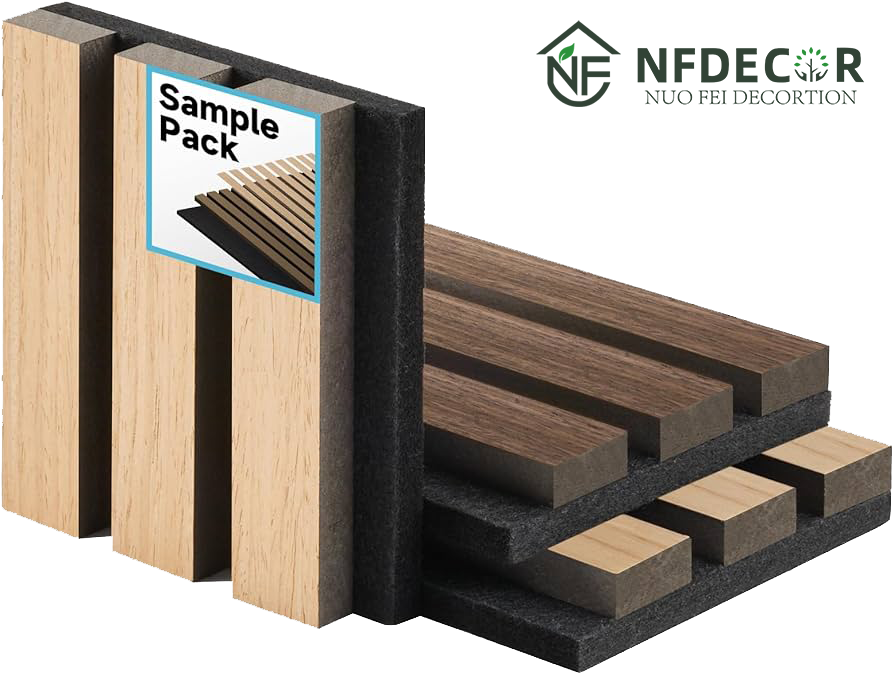
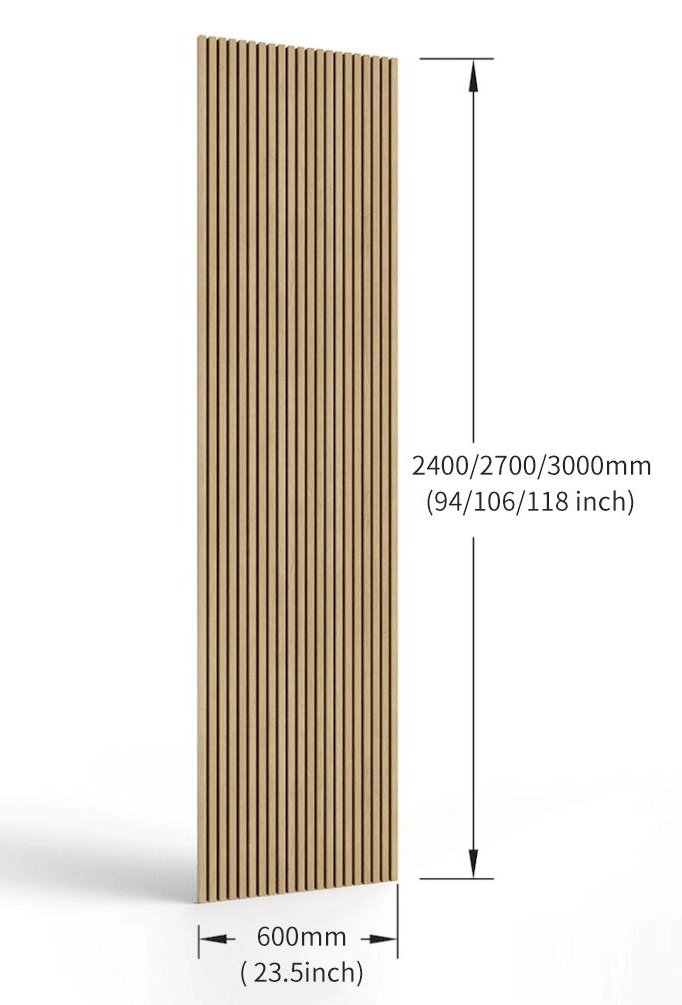
Choosing an acoustic panel manufacturer can feel difficult when several suppliers offer similar photos, prices, and certificates. The risk becomes clear only after a sample cannot be repeated in volume, a finish varies by batch, or delivery slips during production. I recommend evaluating evidence, processes, and order-specific controls before you place a purchase order.
An acoustic panel manufacturer should be evaluated by its ability to reproduce your approved specifications at scale, maintain defined quality controls, and deliver within a realistic production schedule. Buyers should ask for comparable quotations, production records, sample standards, inspection procedures, material documentation, and order-specific lead-time confirmation—not rely on claims, one sample, or a headline capacity figure.

In my manufacturing experience, successful B2B orders begin with clear specifications and evidence that both parties understand what must be delivered. The eight questions below help importers, distributors, designers, and project buyers identify where a supplier’s confidence is supported by repeatable manufacturing controls.
1. Can the Acoustic Panel Manufacturer Quote Against the Same Product Baseline?
A low quotation can look attractive when a project budget is under pressure. However, I have seen buyers compare prices before confirming material composition, finish, dimensions, or packaging. That creates uncertainty because two “similar” acoustic panels may be built to very different standards1.
Ask the acoustic panel manufacturer to provide a line-by-line quotation tied to a written product specification. The quotation should define dimensions, core materials, surface finish, panel construction, tolerances, packaging, accessories, and acceptance criteria. This evidence reduces the risk of comparing prices for products that are not actually equivalent.
A quotation is not only a price document. It is also the first practical test of whether a supplier understands your order.
When I review a request for quotation, I look for areas where the specification remains open to interpretation. For example, “oak acoustic panels” may refer to different veneer types, printed finishes, laminate surfaces, solid wood components, or color treatments. Likewise, “black felt backing” does not explain felt thickness, density, recycled-content expectation, flame-retardant treatment status, or acceptable color variation.
What a Comparable Quotation Should Include
I suggest asking every potential supplier to quote against the same written baseline:
| Specification Area | What Buyers Should Define | Why It Matters |
|---|---|---|
| Panel dimensions | Length, width, thickness, allowable tolerance | Prevents installation and coverage calculation issues |
| Surface material | Veneer, laminate, MDF wrap, suede, PET felt, or other defined material | Affects appearance, cost, durability, and consistency |
| Core and backing | MDF type, plywood, felt thickness, adhesive approach | Changes the panel structure and performance characteristics |
| Finish | Color code, sheen, grain direction, edge treatment | Reduces subjective finish disputes |
| Packaging | Pieces per carton, corner protection, pallet requirements | Helps protect goods during export transit |
| Accessories | Screws, clips, trims, adhesive, installation kits | Avoids missing-item costs |
| Acceptance criteria | Approved sample reference, defect limits, inspection method | Establishes a basis for quality discussions |
The Risk of a “Target Price First” Conversation
I have handled inquiries where a buyer asked, “Can you meet this target price?” before sending a drawing, finish reference, packaging requirement, or required quantity by SKU. I understand why buyers begin there. They need to establish commercial feasibility quickly.
Still, a supplier can only provide a meaningful target price after the product baseline is aligned. Otherwise, a low price can result from:
- A thinner backing material
- A different wood or board grade
- Reduced packaging protection
- Wider dimensional tolerances
- A different finish process
- Excluded inspection, labeling, or pallet requirements
I recommend that buyers request a quotation revision history if specifications change. This makes it easier to track why a price moved and whether the final commercial offer matches the approved product.
A reliable acoustic panel manufacturer should be willing to clarify assumptions in writing. If a supplier avoids specifics, I would treat the quotation as an early warning sign rather than a confirmed purchasing basis.
2. Can the Acoustic Panel Manufacturer Reproduce the Approved Sample at Scale?
An attractive sample often gives buyers confidence, especially when they need client approval. Yet a single sample can be hand-selected, manually adjusted, or made with materials from one favorable batch. The real challenge is ensuring that the same appearance and construction can be repeated across a volume order.
A buyer should ask how the acoustic panel manufacturer converts an approved sample into a mass-production standard. Request a signed sample reference, bill of materials, finish reference, process instructions, and batch inspection approach. This evidence reduces the risk that production panels differ from the approved sample.

An approved sample matters, but it should be treated as the start of production control rather than the end of supplier evaluation.
In our manufacturing experience, a sample can establish the visual target, panel structure, and basic workmanship expectation. However, mass production introduces variables that may not appear in a single piece. Raw material batches can vary. Surface tones can shift. Cutting equipment needs calibration. Adhesive application can change with temperature, humidity, or process settings. Packaging teams must also protect the finished product consistently.
Ask How the Sample Becomes a Production Standard
I recommend asking the supplier for a documented process that covers these points:
-
Sample identification The approved sample should have a clear version number, date, buyer reference, and sign-off record.
-
Material definition The factory should identify the agreed board, felt, veneer, finish, adhesive, and accessory materials.
-
Visual reference standard The supplier should retain an approved color or finish reference for production comparison.
-
Work instructions Production teams should receive instructions for slat spacing, cutting dimensions, edge treatment, assembly, and packing.
-
Inspection checkpoints Quality personnel should check key features before, during, and after production.
-
Retention samples Where appropriate, the supplier can retain a reference panel from the approved stage and from the production batch.
Sample Approval Does Not Eliminate Production Risk
A buyer should ask what happens if production materials are unavailable or if a proposed substitution is needed. I recommend requiring written approval before any material, finish, or construction change.
The same principle applies to natural or decorative materials that can show variation. If a surface has wood grain, textile texture, suede-like character, or other visual variation, the buyer and supplier should agree on what variation is acceptable. A product may be within the intended design range while still differing from a photographed sample.
I treat an approved sample as a controlled reference, not as proof that every future panel will automatically match it.
For larger commercial projects, buyers may also consider a pre-production sample made from the confirmed production materials. This step can be useful when the final order has customized dimensions, a new color, special packaging, or project-specific installation requirements.
An experienced acoustic panel manufacturer should explain how it controls the path from sample approval to batch production. A vague promise that “mass production will be the same” is less useful than a defined process with records and inspection points.
3. What Raw-Material and In-Process Quality Controls Are Used?
Panels can look correct when they leave the factory yet reveal defects after cutting, installation, or transportation. Weak backing, inconsistent spacing, poor edge treatment, moisture-related distortion, or insufficient packaging can create avoidable claims. Buyers need to understand how quality is managed before final inspection.
Ask the acoustic panel manufacturer which raw materials are inspected, which production stages are controlled, and what records are retained. Relevant evidence may include incoming-material checks, process inspection forms, measurement records, defect-handling procedures, and final inspection reports. This reduces the risk of relying only on a finished-goods visual check.

Final inspection is important, but it cannot fully correct problems created earlier in production.2 I encourage buyers to think of quality control as a sequence rather than a single event.
For acoustic and decorative wall panels, the sequence often begins with incoming materials. The factory should verify that the materials received match the order’s defined construction and finish requirements. The exact checks will vary by product type, but the supplier should be able to explain how it prevents unapproved materials from entering production.
Quality Control Should Follow the Manufacturing Flow
A practical control plan may include the following stages:
| Production Stage | Example Check | Buyer Risk Reduced |
|---|---|---|
| Incoming materials | Board thickness, felt color, surface condition, accessory count | Incorrect or inconsistent materials |
| Cutting and machining | Length, width, straightness, edge quality | Installation gaps and poor fit |
| Assembly | Slat alignment, spacing, adhesive coverage | Uneven appearance and structural defects |
| Surface finishing | Color consistency, scratches, grain direction | Visible variation across installed walls |
| Final inspection | Dimensions, visual defects, quantity, labeling | Shipment of nonconforming goods |
| Packaging | Corner protection, carton markings, pallet stability | Transit damage and inventory confusion |
Ask About Tolerances and Defect Criteria
Many disputes happen because buyers and suppliers use subjective words such as “good quality,” “premium,” or “no defects.” I recommend replacing those phrases with measurable criteria where possible.
For example, buyers can ask:
- What dimensional tolerance applies to each panel type?
- How is slat spacing measured?
- What degree of color or grain variation is expected?
- Which surface marks are considered unacceptable?
- How are damaged pieces separated and recorded?
- Who has authority to release or hold a batch?
A supplier does not need to promise that every decorative panel will be visually identical. In fact, that could be unrealistic for products containing natural materials or textured finishes. The supplier should instead define a reasonable standard based on the approved reference and product category.
Review the Corrective-Action Process
I also suggest asking how the factory handles nonconforming products during production. A credible process usually includes identification, segregation, review, rework rules, and reinspection. Buyers do not need access to every internal document, but they should understand whether the factory has a structured way to prevent defects from moving forward.
In our experience, production consistency depends on repeatable work, clear inspection standards, and active communication between purchasing, production, quality, and packing teams. A capable acoustic panel manufacturer should be able to describe that chain clearly.
4. What Evidence Supports the Acoustic Panel Manufacturer’s Capacity and Delivery Promise?
A factory may state a large monthly capacity, but that number does not automatically mean your order can ship on your required date. Capacity is influenced by current bookings, product complexity, material availability, sampling, production, rework, inspection, packaging, and export preparation.
Buyers should ask an acoustic panel manufacturer for order-specific delivery planning rather than relying on a stated monthly capacity. Request a production timeline, current scheduling confirmation, material lead-time assumptions, inspection stages, packaging plan, and shipment readiness date. This reduces the risk of promises that overlook actual factory constraints.
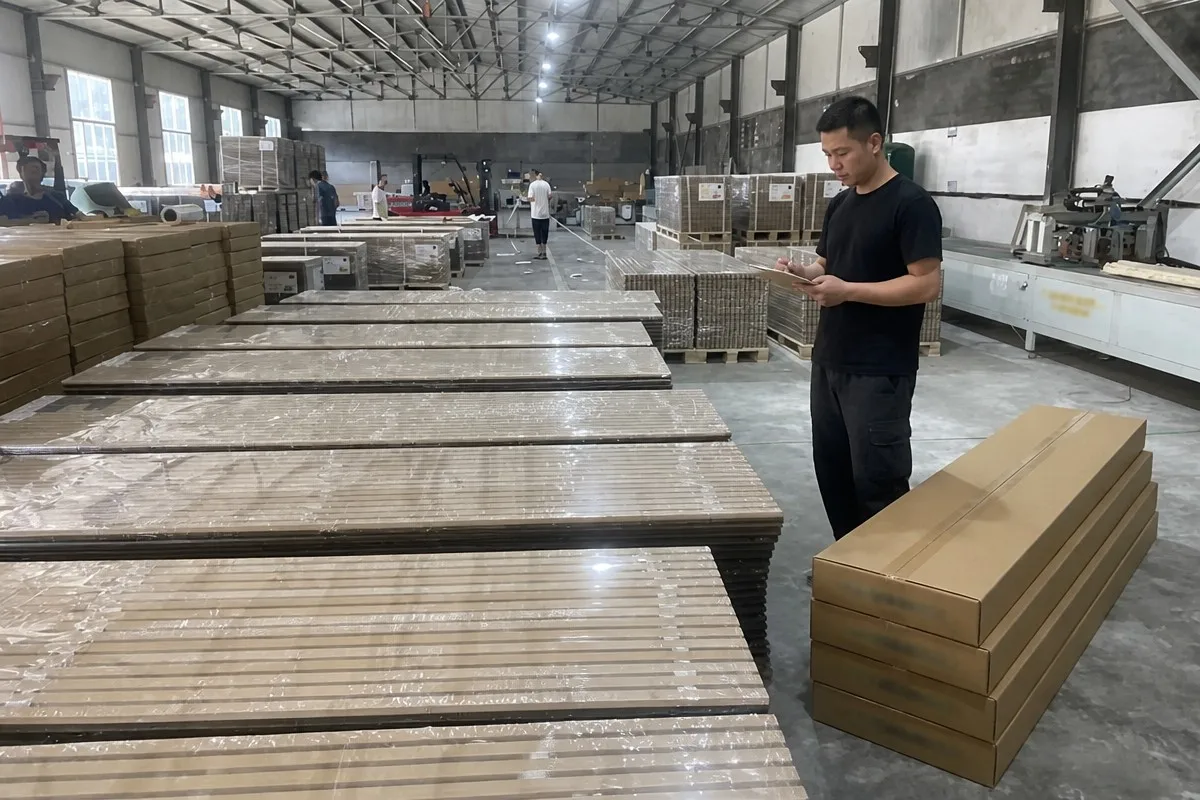
I often explain that monthly capacity and available capacity are not the same thing3. A factory may have multiple production lines and a meaningful output capability, yet a specific order could still require a longer lead time because of finish development, material procurement, peak-season scheduling, or packing requirements.
NF Decor operates multiple production lines and reports monthly capacity above 50,000 m². However, I would still advise buyers to verify the delivery plan for their specific product, quantity, finish, and requested ship date. The same standard should apply to every supplier.
Ask for a Stage-by-Stage Timeline
A useful delivery discussion should cover more than “20 days” or “30 days.” I recommend asking the supplier to outline the major stages:
- Final specification and artwork confirmation
- Sample approval, if required
- Raw-material ordering and receipt
- Production scheduling
- Panel manufacturing and finishing
- In-process and final inspection
- Rework allowance, where necessary
- Packaging and palletizing
- Booking, loading, and shipment preparation
This timeline helps buyers identify dependencies. For example, a customized finish may require confirmation before the factory can release materials. A project with multiple sizes may require separate cutting plans. A buyer-requested third-party inspection may need to be booked before cargo loading.
Questions That Reveal Real Delivery Capability
I suggest asking:
- What orders are already scheduled during my proposed production window?
- Which materials have the longest procurement lead time?
- Which steps are on the critical path?
- How much time is allowed for final inspection and potential rework?
- When will the factory confirm that goods are ready for inspection?
- What happens if the buyer changes specifications after production begins?
I have seen buyers request a firm delivery commitment before the panel dimensions, finish, and packaging were final. A supplier may feel pressure to provide an optimistic answer. However, a realistic date is more valuable than an early date that later changes.
A dependable acoustic panel manufacturer should distinguish between estimated lead time and confirmed production scheduling. Buyers should also consider building reasonable contingency time into commercial project schedules, especially for customized products or sea freight shipments.
5. How Does the Acoustic Panel Manufacturer Manage Customization Without Losing Consistency?
Customization can help distributors build differentiated product ranges and help project buyers meet design requirements. Yet every change in dimensions, finish, felt color, edge profile, packaging, or labeling adds production variables. Without control, customization can create inconsistent batches and unclear accountability.
Ask how the acoustic panel manufacturer documents customized requirements before production begins. Buyers should request drawings, color references, material lists, sample approval records, packaging artwork, and change-control procedures. This evidence reduces the risk that customization instructions are misunderstood or applied inconsistently.
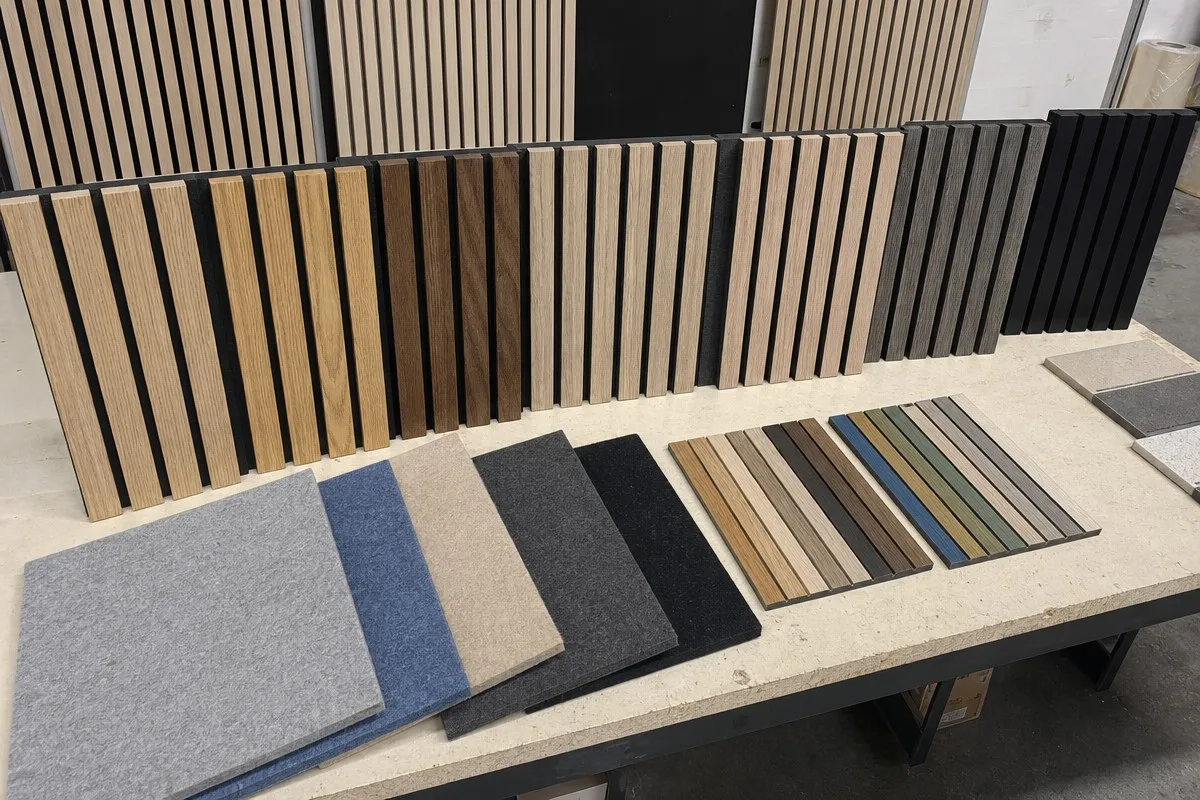
Customization should be treated as an engineering and production-control task, not merely a sales promise.
In my experience, the most manageable customized orders are those where the buyer provides a clear hierarchy of requirements. For instance, the buyer may identify which dimensions are fixed, which finish is critical, which packaging marks are required, and which elements can vary within an agreed range.
Define the Custom Elements Clearly
For decorative and acoustic wall panel orders, customization may include:
- Panel length, width, and thickness
- Slat width, spacing, or orientation
- Felt color and backing construction
- Veneer, laminate, suede-like, or decorative surface finish
- Wood-tone reference or color sample
- Edge treatment and trim compatibility
- Private-label carton artwork and barcode labels
- Pallet configuration for warehouse handling
- Project-specific accessory kits
Each item should appear on the final specification or purchase order. Verbal instructions, chat messages, and unmarked photos can be useful during development, but they are not ideal as the only production reference.
Use Change Control After Approval
I recommend asking the supplier what happens after a sample or specification is approved. A formal change process can be simple, but it should require both sides to confirm the impact on price, lead time, materials, and quality expectations.
For example, a change from one felt color to another may seem minor. However, it can affect material availability, color matching, production scheduling, and carton labeling. A different panel length can affect yield, cutting plans, carton dimensions, and pallet loading.
Review Feasibility Before Promising the Project
Buyers should also ask whether the proposed design is practical for production and installation. This does not mean the factory should replace a qualified project designer, architect, installer, or acoustic consultant. It means the supplier should identify obvious manufacturing constraints early.
For application-specific acoustic outcomes, fire requirements, environmental claims, or local building compliance, I recommend that buyers obtain the relevant applicable documentation and seek qualified professional evaluation where needed. Product claims should be tied to the exact construction, test method, jurisdiction, and current document—not a generic certificate from another product version.
A capable acoustic panel manufacturer will not simply say yes to every customization request. The more useful supplier will explain what can be repeated reliably, what needs sampling, and what requires additional validation.
6. Which Documents, Test Reports, and Certifications Apply to the Exact Product?
Certificates and test reports can support supplier evaluation, but they can also be misunderstood. A document may apply to a different panel construction, an expired period, a specific material, or a particular test condition. Buyers should verify relevance instead of treating a logo on a website as a complete compliance review.
Ask the acoustic panel manufacturer to provide documents that can be matched to the exact product, material construction, and intended market. Buyers should verify the issuing organization, scope, date, product identification, test method, and validity directly where appropriate. This reduces the risk of relying on documents that do not apply to the ordered panel.

NF Decor holds certifications and documentation described as including CE, SGS, ISO, and FSC. I would still encourage every buyer to verify the scope and relevance of any document supplied, including ours. Certifications are not interchangeable4, and their meaning depends on what was assessed.
Questions to Ask About Documentation
Buyers can request copies and then review the following:
| Document Type | Questions to Ask |
|---|---|
| Test report | Does the report identify the same product construction, thickness, and surface material? |
| Certification | What does the certification cover: factory system, material source, product, or process? |
| Chain-of-custody documentation | Does it apply to the requested material and purchasing arrangement? |
| Declaration or conformity document | Is it appropriate for the destination market and product category? |
| Environmental documentation | Which material, emission method, or restricted substance requirement does it address? |
| Fire-related documentation | Does it match the exact panel build, mounting method, and jurisdictional requirement? |
Avoid Broad Claims From Narrow Evidence
A report for one panel size or material build may not automatically apply to another. For example, changing backing thickness, adhesive, surface layer, mounting method, or core material may affect whether a prior report remains relevant. I do not recommend assuming that any acoustic, fire, environmental, or market-compliance claim transfers across all variants.
The buyer should also ask whether the report comes from an independent testing organization and whether the report can be verified through the issuer. If the intended project has a specific regulatory requirement, the project team should consult qualified local professionals or compliance specialists.
Documentation Supports—but Does Not Replace—Manufacturing Control
A certificate can demonstrate that a defined assessment took place. It does not by itself prove that every future batch will match the assessed product. That is why I recommend reviewing documents together with:
- Material controls
- Approved sample records
- Batch traceability
- Inspection procedures
- Production change controls
- Third-party inspection options, when appropriate
A responsible acoustic panel manufacturer should be transparent about what its documents do and do not demonstrate. This protects both the buyer and supplier from making unsupported claims during procurement or project approval.
7. Can the Acoustic Panel Manufacturer Support Independent Inspection and Clear Acceptance Criteria?
Buyers often discover quality concerns too late because they did not define how goods would be inspected before shipment. A supplier may consider a variation acceptable while the buyer considers it a defect. This gap can create disputes, delayed shipments, and difficult claims after cargo has left the factory.
Buyers should ask whether the acoustic panel manufacturer can support agreed pre-shipment inspection, defined sampling methods, and written acceptance criteria. Request an inspection checklist, approved sample reference, defect classification approach, measurement points, and corrective-action process. This reduces the risk of subjective quality decisions at the end of production.
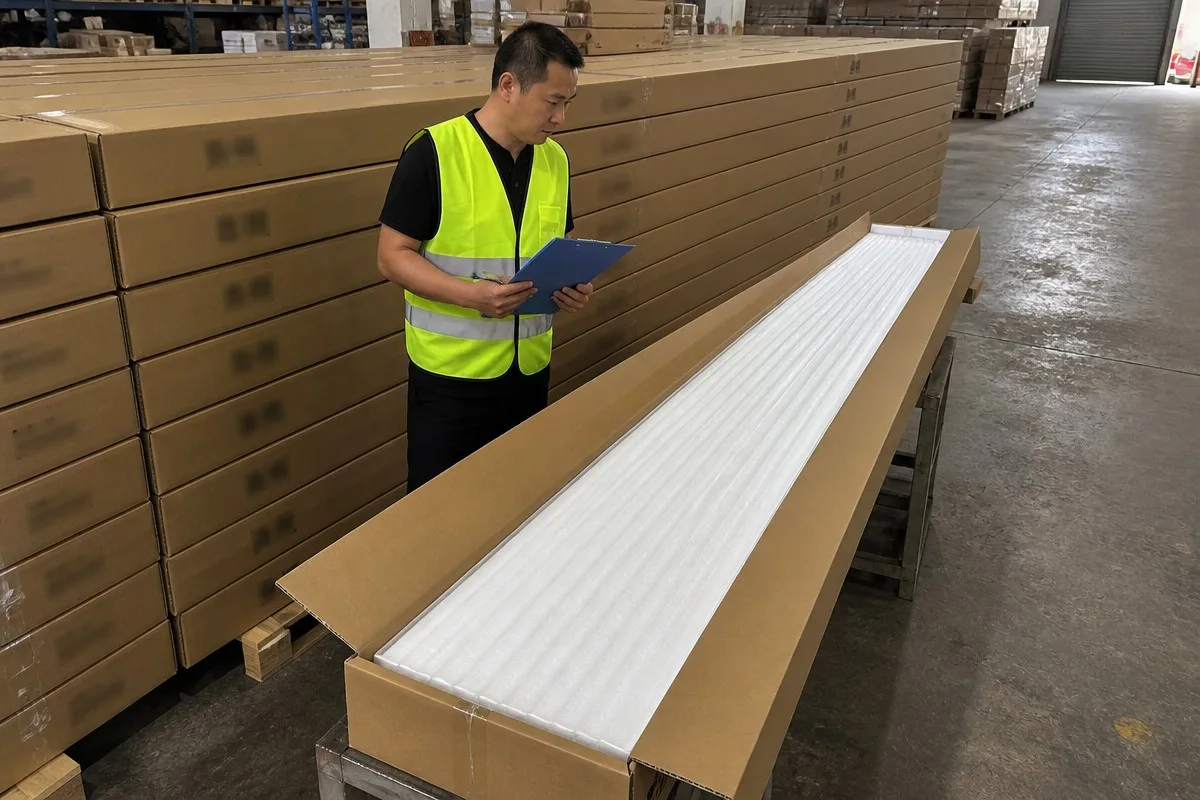
I recommend discussing inspection before a purchase order is issued, especially for container orders, private-label programs, and commercial projects. Inspection works best when it confirms an agreed standard rather than when it becomes a last-minute attempt to define quality.
Build an Inspection Checklist Around the Order
The inspection checklist should reflect the actual risks of the product. For wall panels, it may include:
- SKU, quantity, and carton count
- Panel dimensions and agreed tolerances
- Surface color or finish compared with the approved reference
- Slat alignment and spacing
- Felt backing appearance and attachment
- Scratches, chips, stains, cracks, or edge damage
- Carton artwork, labels, barcodes, and shipping marks
- Pallet condition and loading arrangement
- Accessory quantity, if accessories are included
The buyer and supplier should also agree on how to classify defects. Some buyers use categories such as critical, major, and minor. The exact approach should be appropriate for the order and should be agreed in writing.
Clarify Who Inspects and When
The inspection may be completed by the factory’s quality team, the buyer’s team, or an independent third-party inspection provider. Each option has a different role.
| Inspection Approach | Potential Benefit | Important Limitation |
|---|---|---|
| Factory internal inspection | Fast and integrated with production | Buyers should understand the factory’s criteria and reporting method |
| Buyer representative inspection | Direct buyer oversight | May require travel, scheduling, and technical knowledge |
| Independent third-party inspection | Additional external review | Scope must be defined; it does not replace product specification work |
A third-party inspection can be helpful, but it is not a substitute for clear specifications. Inspectors can only check against agreed criteria and the selected sampling scope.
Ask About Rework and Release Procedures
I also recommend asking what happens if inspection identifies nonconforming goods. The supplier should explain:
- How affected goods are separated
- Whether rework is possible without changing the approved construction
- When reinspection can occur
- Who approves shipment release
- How shortages or replacements are handled under the agreed commercial terms
An acoustic panel manufacturer that welcomes clear inspection criteria is usually easier to work with over the long term. The goal is not to create an adversarial process. The goal is to make quality expectations visible before the shipment is ready.
8. How Will the Acoustic Panel Manufacturer Communicate, Package, and Support Delivery?
Even well-made panels can create problems if communication is slow, packaging is weak, or shipping documents are inaccurate.5 B2B buyers need reliable information from quotation through loading because product delays and damage can affect downstream distributors, installers, and commercial project schedules.
Ask the acoustic panel manufacturer how it manages order communication, export packaging, labeling, shipment documents, and post-shipment issue handling. Buyers should request packaging specifications, carton and pallet details, document samples, milestone updates, and a defined contact process. This reduces the risk of avoidable logistics errors and unclear responsibility.
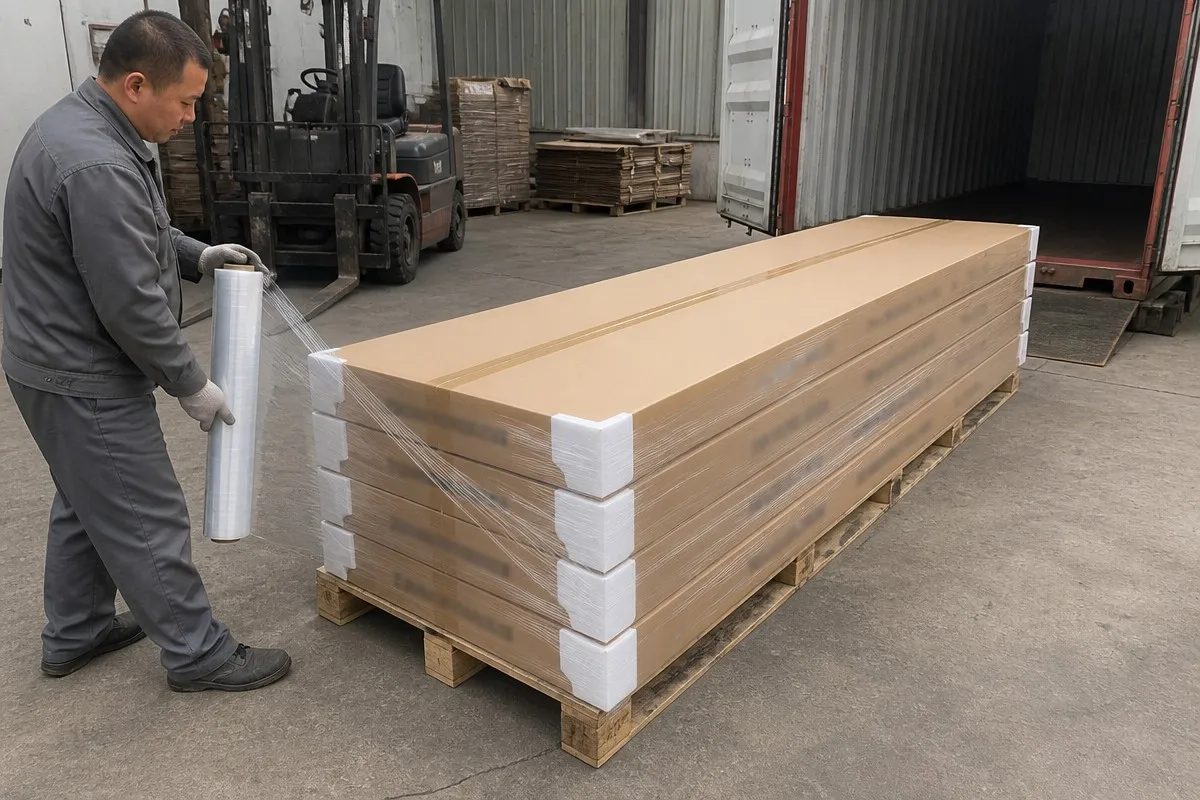
Communication is a practical indicator of supplier control.6 I do not expect every factory to answer every question instantly, but I do expect a supplier to provide accurate updates, identify pending decisions, and communicate changes before they become urgent.
Confirm the Communication Milestones
For a volume order, I suggest agreeing on updates at key stages:
- Order confirmation and final specification approval
- Sample approval or pre-production sample completion
- Raw-material readiness, where relevant
- Production start
- Production completion
- Inspection booking and result
- Packaging completion
- Container loading or handover
- Shipping document release
A buyer should know who is responsible for each stage. This is especially important when a trading company, freight forwarder, inspection company, factory, and buyer are all involved.
Packaging Is Part of Product Quality
Export packaging should be evaluated based on the product’s size, surface sensitivity, transport route, warehouse handling, and loading method.7 Buyers can ask for:
- Carton dimensions and gross weight
- Pieces per carton
- Corner or edge protection details
- Internal separators or protective film
- Moisture-protection approach, where relevant
- Pallet dimensions and stacking pattern
- Container loading plan
- Carton marks and barcode placement
I have seen packaging discussed only after panel production was complete. That can create avoidable redesign work if cartons do not meet warehouse labeling needs or if pallet dimensions do not suit the buyer’s handling system.8
Review the Claim-Handling Process
No supplier can guarantee that logistics issues will never happen. What matters is whether the supplier has a workable process for documenting and reviewing issues.
I recommend asking how the supplier wants buyers to report:
- Visible transit damage
- Shortages
- Incorrect labels or SKUs
- Product defects discovered before installation
- Product concerns discovered during installation
The commercial contract should define responsibilities, evidence requirements, timelines, and remedies.9 Buyers should retain photos, carton labels, inspection reports, and unloading records where possible.10
A reliable acoustic panel manufacturer should treat packaging and communication as part of order fulfillment. These details may not appear in a showroom sample, but they have a major effect on the buyer’s real landed experience.
Frequently Asked Questions
What should I ask an acoustic panel manufacturer before requesting samples?
I recommend sending a written specification that includes panel dimensions, materials, finish references, quantity, destination market, packaging expectations, and intended application. You should also ask whether the sample will use the same materials and process planned for mass production.
Is a low price a sign of poor acoustic panel quality?
A low price does not automatically indicate poor quality. However, buyers should confirm that every supplier is quoting the same materials, construction, finish, tolerances, packaging, and inspection requirements. I believe price comparisons only become meaningful after the product baseline is aligned.
How can I verify an acoustic panel manufacturer’s production capacity?
You should ask for an order-specific production plan, not only a monthly capacity figure. I recommend reviewing current scheduling, material lead times, production stages, inspection timing, packaging capacity, and shipment readiness. Available capacity can differ significantly from stated capacity.
Should I use a third-party inspection for acoustic panel orders?
A third-party inspection can provide an additional review before shipment, particularly for larger or customized orders. However, it works best when buyers have already defined acceptance criteria, reference samples, dimensions, defect standards, and packaging requirements. Inspection cannot correct an unclear specification.
Do certificates prove that all acoustic wall panels meet project requirements?
Certificates and reports may support evaluation, but they do not automatically apply to every product variation or project requirement.11 Buyers should verify the document scope, product construction, test method, issuing organization, date, and destination-market relevance. Qualified professional advice may be necessary for application-specific decisions.
Conclusion
Selecting an acoustic panel manufacturer requires more than reviewing catalog photos, capacity claims, or the lowest quotation. I recommend buyers evaluate comparable specifications, sample-to-production controls, material inspections, realistic delivery planning, customization records, applicable documentation, inspection procedures, and export support. The strongest supplier relationship is built on evidence that can be checked before production begins. If you are sourcing acoustic or decorative wall panels for distribution or a commercial project, I encourage you to send NF Decor your specifications so we can discuss a documented, order-specific production approach.
“Acoustic Panel Procurement: From Room Goals to Approved ...”, https://blogs.bu.edu/kongta/acoustic-panel-procurement-guide/. Acoustic treatment products may use materially different facing, core, backing, and mounting constructions; these design choices can affect their physical and acoustic characteristics. Evidence role: general_support; source type: research. Supports: Acoustic-panel construction commonly varies by facing, core, backing, and mounting design, with these variables affecting product properties.. Scope note: This supports the general principle of construction variability and does not establish equivalence or performance for any particular supplier’s panels. ↩
“Use of quality assurance systems in the fastener industry”, https://nvlpubs.nist.gov/nistpubs/Legacy/IR/nistir6001.pdf. Quality-management practice emphasizes controlling processes throughout production, since final inspection can identify some nonconformities but cannot fully prevent defects created at earlier stages. Evidence role: expert_consensus; source type: government. Supports: Quality assurance emphasizes process controls and prevention because final inspection may detect defects but cannot fully prevent defects created upstream.. Scope note: The appropriate control plan and inspection intensity depend on the product, process capability, and risk level. ↩
“Scheduling and Ordering Production Policies in a Limited ...”, https://dash.harvard.edu/bitstreams/7312037c-5053-6bd4-e053-0100007fdf3b/download. Operations-management literature distinguishes theoretical or maximum production capacity from capacity available for a specific order after existing schedules, constraints, and processing requirements are considered. Evidence role: definition; source type: education. Supports: Design or maximum capacity differs from capacity available after accounting for existing commitments, scheduling, changeovers, and operational constraints.. Scope note: The exact available capacity of a supplier can only be established from its current production schedule and order-specific requirements. ↩
“Management system standards”, https://www.iso.org/management-system-standards.html. Conformity-assessment frameworks distinguish among product testing, product certification, management-system certification, and declarations of conformity, each of which has a defined scope and evidentiary purpose. Evidence role: definition; source type: institution. Supports: Conformity-assessment documents have defined scopes, and management-system certification is distinct from product testing, product certification, and declarations of conformity.. Scope note: The meaning and legal relevance of a document also depend on the applicable jurisdiction, product category, and issuing body’s accreditation. ↩
“Common Export Documents”, https://www.trade.gov/common-export-documents. International trade guidance identifies accurate shipping documentation and packaging appropriate to the transport journey as important controls for shipment processing and cargo protection. Evidence role: general_support; source type: government. Supports: Export documentation and transport packaging are important controls for international shipment handling, customs processing, and cargo protection.. Scope note: The effect of a particular documentation or packaging failure depends on the route, carrier, product, and contractual allocation of responsibility. ↩
“The Fundamentals of Supplier Quality Management”, https://www.kodiakhub.com/blog/supplier-quality-management. Supplier-management literature and quality-management systems recognize timely communication and controlled documented information as mechanisms for coordinating responsibilities, changes, and operational activities. Evidence role: general_support; source type: research. Supports: Supplier-management research and quality-management systems treat timely communication and documented information as components of coordinated operational control.. Scope note: Communication quality alone is not a validated measure of a supplier’s overall manufacturing capability or product quality. ↩
“Packaging and Labeling Requirements FAQs”, https://www.nist.gov/pml/owm/faqs/packaging-and-labeling-requirements-faqs. Transport-packaging guidance treats package design as dependent on the product’s characteristics and the handling, storage, and distribution hazards likely to occur along its supply chain. Evidence role: mechanism; source type: institution. Supports: Transport-package design considers product vulnerability and the physical hazards expected during handling, storage, and distribution.. Scope note: A general packaging framework does not prescribe the carton, pallet, or protective materials needed for a specific panel design. ↩
“How Much Load Can My Pallet Carry?”, https://unitload.vt.edu/education/white-papers/5-wp-load-carrying-capacity-of-pallets.html. Logistics standards describe shipping labels and unit-load configuration as inputs to identification, receiving, storage, and material-handling processes, making incompatibilities operationally consequential. Evidence role: mechanism; source type: institution. Supports: Standardized logistics labels and compatible unit-load dimensions support receiving, identification, storage, and material handling.. Scope note: The source supports the operational relevance of labels and load configuration but does not quantify redesign costs for a given order. ↩
“ICC Distributorship Contract (Sole Importer-Distributor)”, https://www.sec.gov/Archives/edgar/data/1956741/000121390024080420/ea021456701ex10-1_cleancore.htm. International commercial-contract frameworks address the allocation of obligations, notice requirements for nonconformity or non-performance, and remedies available when contractual duties are not met. Evidence role: general_support; source type: institution. Supports: International commercial-contract frameworks address allocation of obligations, notice of nonconformity or non-performance, and available remedies.. Scope note: Applicable rights and deadlines depend on the governing law, agreed Incoterms, contract language, and facts of the transaction. ↩
“14 FAM 640 CLAIMS FOR PRIVATE PERSONAL ...”, https://fam.state.gov/fam/14fam/14fam0640.html. Cargo-claim guidance commonly calls for prompt documentation of shipment condition and retention of delivery records and supporting evidence when loss or damage is discovered. Evidence role: general_support; source type: government. Supports: Cargo-claim procedures commonly rely on contemporaneous documentation of shipment condition, delivery exceptions, and supporting records.. Scope note: Required evidence and claim deadlines vary among carriers, insurers, transport modes, and contract terms. ↩
“Laboratory Accreditation for Product Testing | WHO”, https://extranet.who.int/prequal/immunization-devices/laboratory-accreditation-product-testing. Laboratory-testing guidance requires reports to identify the item tested and the method used, so reported results should be interpreted within the documented test scope rather than presumed to cover untested product variations. Evidence role: general_support; source type: institution. Supports: Laboratory reports identify the tested item, methods, and results, and conclusions must be interpreted within the stated scope of testing.. Scope note: Whether a report satisfies a project, regulatory, or contractual requirement depends on the relevant jurisdiction, specification, and product configuration. ↩