


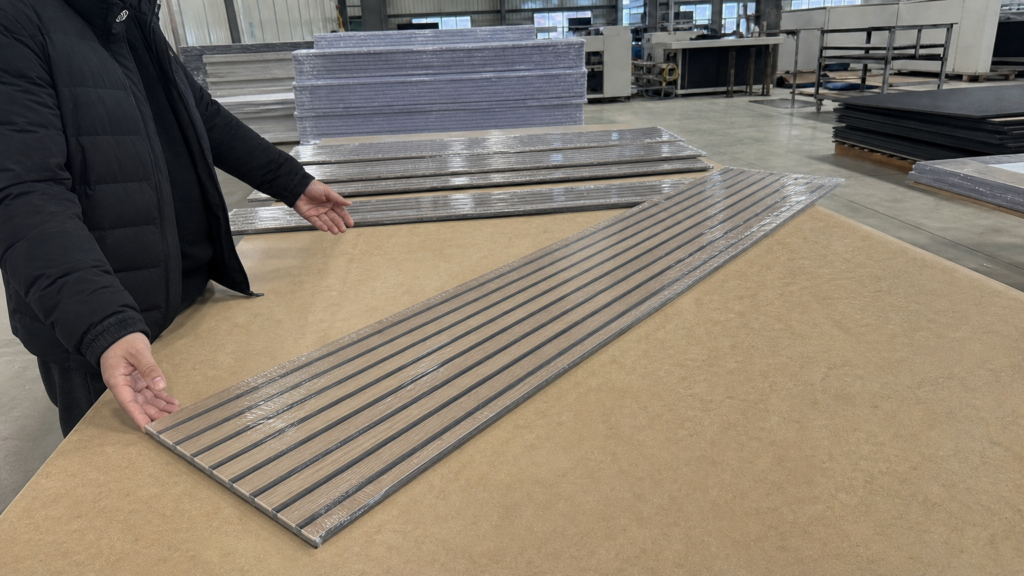
Natural veneer gives an acoustic wall the character buyers want, but it also creates a purchasing risk: color and grain cannot be controlled by a screen image or the word “oak.” I control that risk through written appearance criteria, representative approval samples, planned veneer matching, stable viewing conditions, batch identification, and inspections tied to the signed specification.
The product discussed here uses real wood veneer-faced slats fixed to a continuous black PET acoustic felt, not hollow WPC. Natural wood veneer inherently varies in color, grain, figure, and response to finishing. My objective is therefore not artificial uniformity. It is an agreed, traceable visual range that the buyer and supplier can reproduce and judge fairly.
1. How Do I Turn a Visual Preference into a Purchase Specification?
Problem: A buyer approves an attractive photograph or one hand-selected panel, but the purchase order never defines veneer species, cut, grain direction, matching approach, finish, sheen, or acceptable natural variation.
Agitation / Answer: A vague “match this photo” instruction leaves purchasing, production, and inspection using different standards. I convert the visual brief into a signed, revision-controlled appearance specification that identifies the veneer, finish, matching intent, reference samples, viewing method, and acceptance process before price and production are finalized.

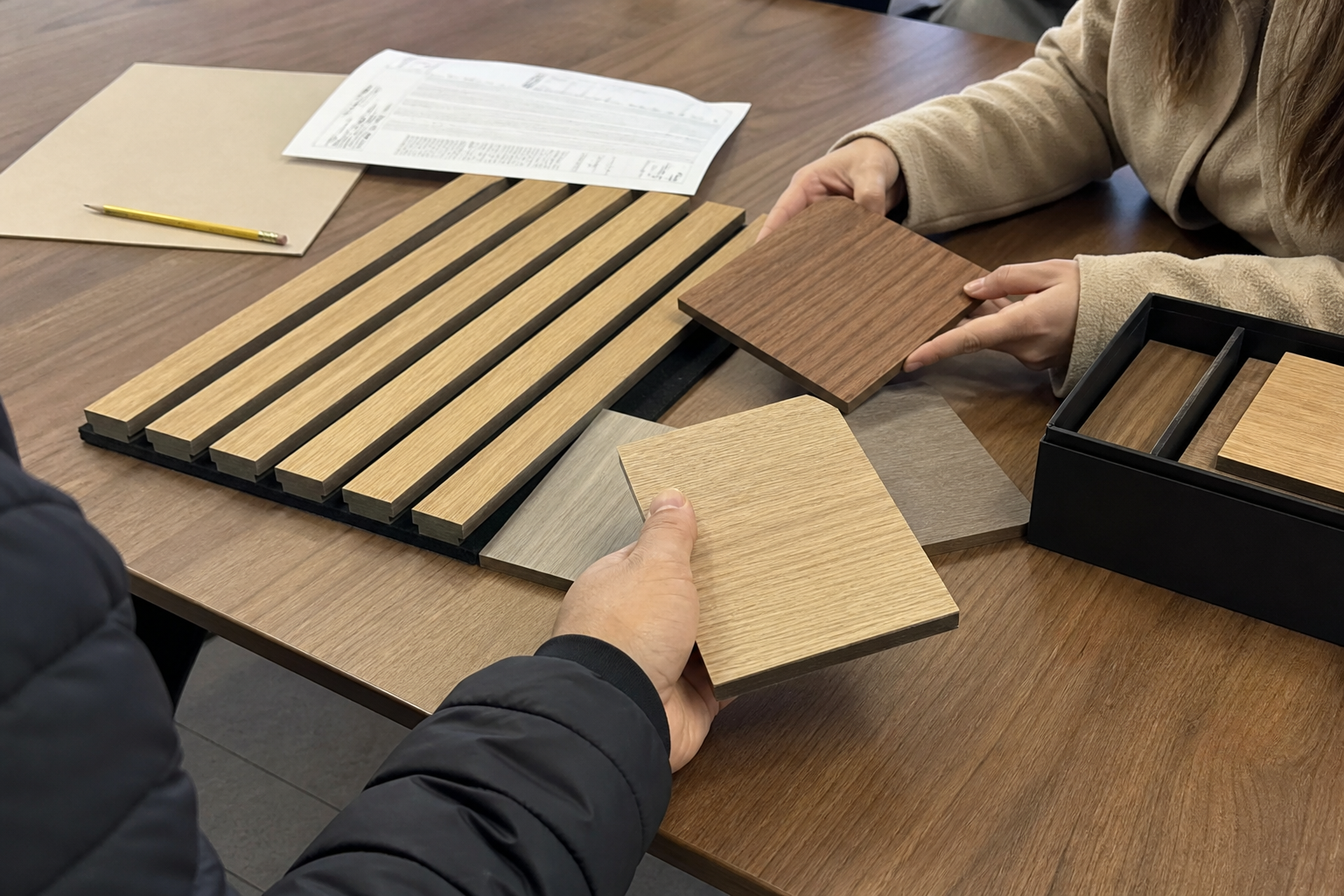
I start by separating product construction from appearance. The construction line should state real wood veneer-faced slats fixed to continuous black PET acoustic felt. It should also identify the agreed panel build and dimensions. For background on material terminology, I direct buyers to NFDecor’s acoustic panel materials guide.
Next, I write an appearance schedule rather than relying on descriptive names alone:
| Control point | What I record |
|---|---|
| Veneer identity | Agreed species or commercial designation and whether the veneer is natural |
| Visual structure | Cut, grain direction, figure expectations, and permitted natural features |
| Assembly intent | Slat-to-slat and panel-to-panel matching method |
| Finish | Approved stain or clear finish reference and sheen description |
| Reference | Coded physical sample set, date, revision, and signatories |
| Inspection | Viewing setup, sampling plan, decision authority, and deviation process |
The USDA Forest Products Laboratory explains that wood appearance reflects anatomical structure and that characteristics differ among species and pieces.1 I therefore state plainly that natural veneer has inherent color and grain variation. I do not insert a convenient tolerance, color value, or defect limit into a quotation. Every numerical limit must come from a specification signed by both buyer and supplier.
I also ask suppliers to list assumptions and exceptions. NFDecor’s guide to comparing acoustic panel prices and quality is useful here: quotations only become comparable after the product and quality baseline are aligned. This step turns taste into an auditable buying requirement without pretending that natural wood is printed décor.
2. How Should I Approve Samples and Fix Viewing Conditions?
Problem: The sample appears warm in a showroom, grey near a window, and darker under warehouse lighting, so an approval made in one setting becomes a dispute in another.
Agitation / Answer: Wood, finish, light source, viewing angle, and nearby colors all affect perception. I approve a representative sample range—not a single ideal piece—under written lighting and observation conditions, then retain coded control samples on both sides so production and receiving teams compare like with like.
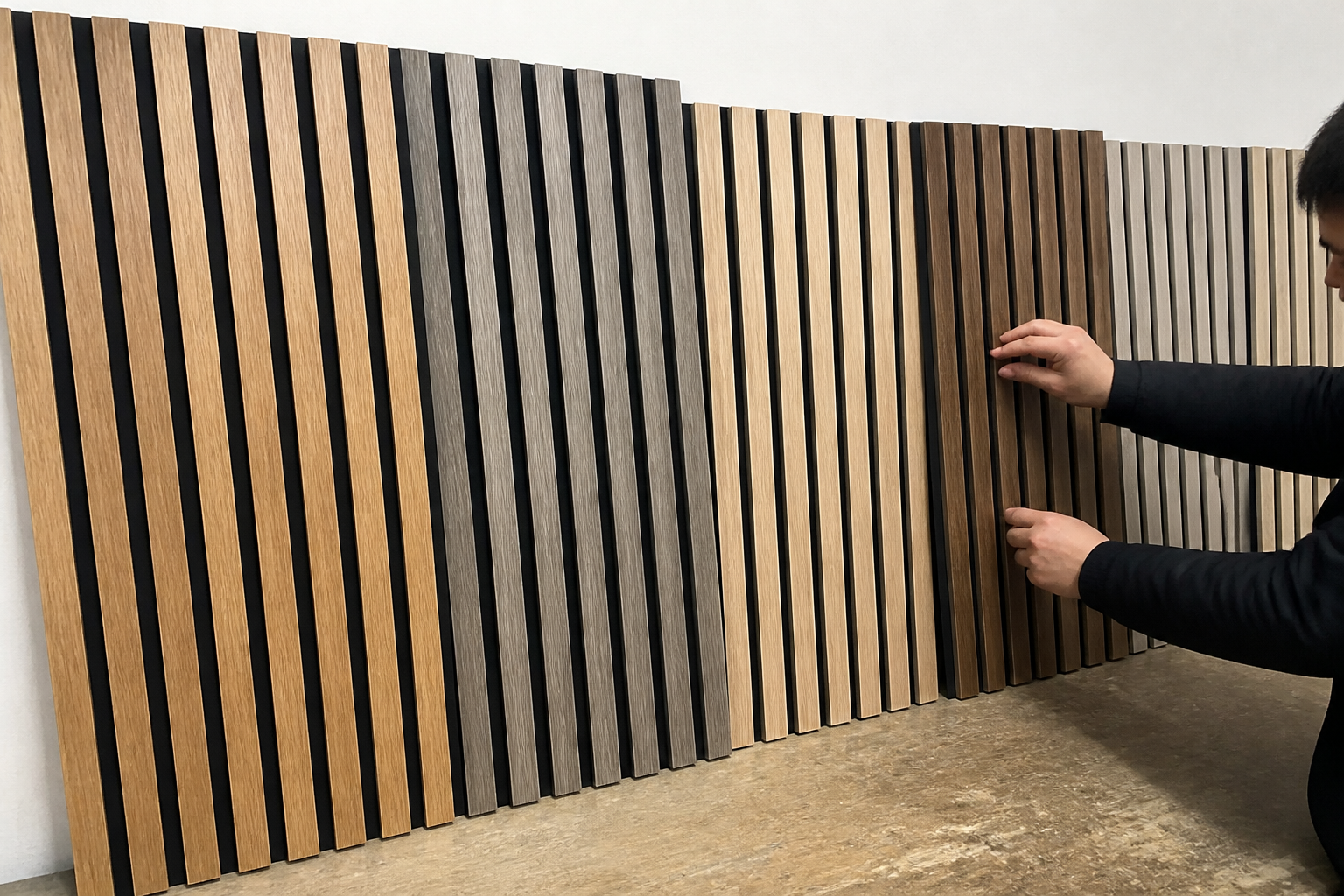
I ask for a sample set that shows the intended center and boundaries of the acceptable appearance, using production-intent veneer and finish wherever possible. Each piece is coded, photographed for traceability, dated, and linked to the current specification. Photographs support identification; they do not replace the physical references because cameras, displays, and automatic white balance can shift color.
My approval record covers:
- the room or booth used for review;
- agreed light source and surrounding conditions;
- panel orientation and grain direction;
- observation distance, angle, and review sequence;
- whether panels are judged individually or as a laid-out group;
- the approved range and any specifically excluded features;
- names, dates, sample codes, and specification revision.
I avoid inventing an illuminance, color temperature, viewing distance, or color-difference threshold. If a project needs numbers, buyer and supplier must select and sign them in the specification. AWI’s published submittal framework reinforces the importance of project contract documents and defined submittal responsibilities, rather than informal approval language.2
Before approval, I review the sample against the full construction and application. NFDecor’s article on choosing wood slat acoustic panels for bulk orders explains why a coded sample must sit beside the written specification, packing agreement, and inspection plan. For hospitality work, the restaurant acoustic panel specification guide adds useful context about coordinating finishes with the intended room.
Finally, I seal or sign the retained sample set and define how ageing, damage, or loss will be handled. No production substitution is accepted through a casual message; it requires documented review and approval.
3. How Do I Control Veneer Sourcing, Sorting, and Grain Matching?
Problem: Correct veneer species and finish can still produce a patchwork wall when leaves are drawn from unrelated logs, mixed without sorting, or assembled with inconsistent grain direction.
Agitation / Answer: I control visual continuity before lamination by agreeing the sourcing basis, keeping identifiable veneer groups together, sorting under the approved viewing setup, and defining the matching sequence across slats and panels. The approved range governs selection; it does not erase the natural character of wood.

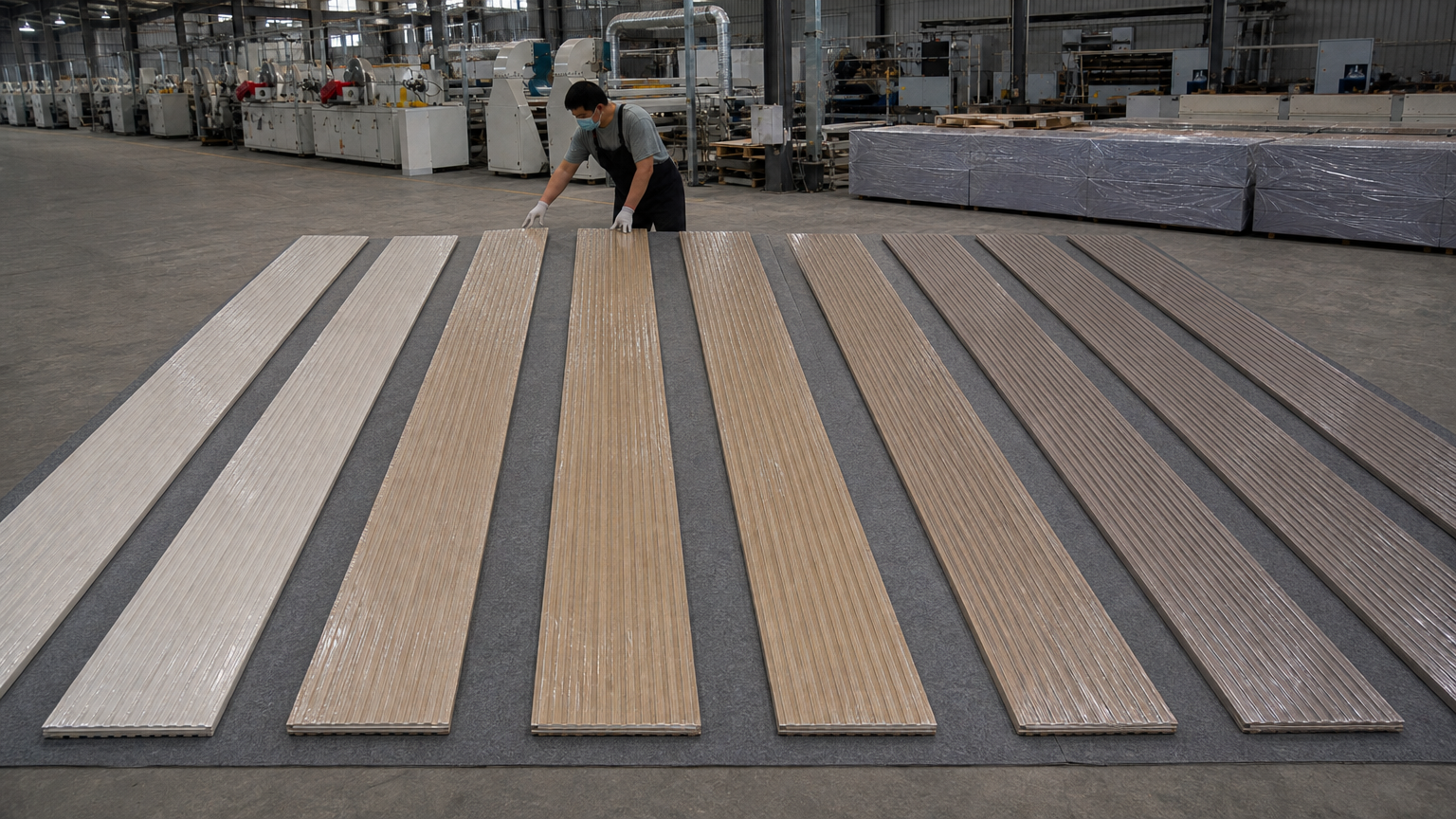
I ask the factory to explain its veneer workflow from receipt to assembly. The practical questions are straightforward: How are bundles or lots identified? When is veneer sorted? Who compares it with the approved range? How is the selected sequence transferred to slat production? What happens when a group cannot meet the signed appearance specification?
For a bulk order, I normally document these controls:
- Incoming identity: record supplier lot or internal material code and quarantine unapproved substitutions.
- Conditioning and finishing basis: use the agreed process because sanding, stain, coating, and substrate can alter the final appearance.
- Sorting: compare production-intent material with the approved range under the specified observation conditions.
- Matching: define grain direction and whether the design calls for sequence, balance, slip, book, random, or another written arrangement.
- Layout review: inspect several adjacent panels as an elevation, not only isolated slats.
- Change control: obtain written buyer approval before changing veneer source, finish system, or matching plan.
I do not promise that material from one log, bundle, or production run will be identical. Even closely related leaves can show natural differences, and finishing may emphasize them. The control is disciplined grouping and placement, followed by inspection against the approved range.
This is also where supplier capability matters. NFDecor’s guide on evaluating an acoustic panel manufacturer recommends asking how an approved sample becomes a repeatable production standard, including material definition, work instructions, checkpoints, and retained samples. Its wooden slat acoustic panel manufacturer page provides product context, but my order documents still govern the exact veneer and matching requirements for the purchase.
4. How Do I Keep Batches Traceable Through Production and Packing?
Problem: Panels pass visual inspection at the factory, then cartons from different veneer groups are mixed across pallets, rooms, or delivery phases, making an otherwise manageable variation look random after installation.
Agitation / Answer: I preserve the factory’s matching work by assigning traceable batch and sequence identities to panels, cartons, and pallets. The packing plan keeps related panels together, while the shipping documents tell the warehouse and installer where each group belongs without implying unsupported visual tolerances.
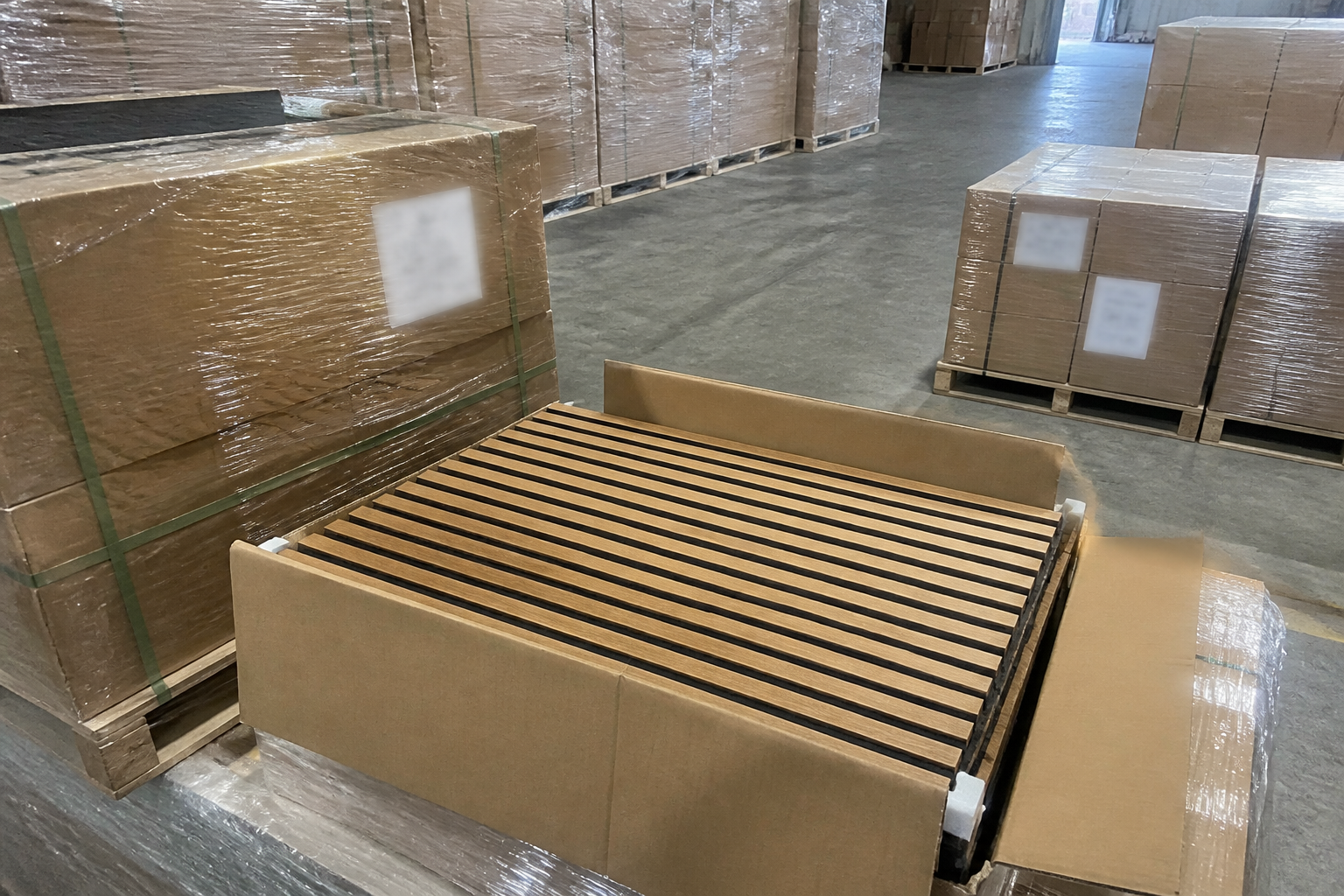
I link traceability to the actual visual control unit used in production. Depending on the signed plan, that may be a veneer group, finish batch, panel sequence, room allocation, or approved production lot. The identifier must appear consistently in the production record, inspection report, carton label, pallet record, and packing list.
My packing and labeling brief usually defines:
- product code and specification revision;
- production or finish batch identity;
- panel or carton sequence where layout continuity matters;
- room, zone, or elevation allocation when supplied by the buyer;
- quantity and orientation information;
- pallet-to-carton relationship;
- handling and opening sequence;
- rule for replacement panels and leftover stock.
I ask the factory to prevent accidental mixing during rework, final inspection, and pallet building. I also request pre-shipment photographs that show label placement and grouped cartons, without treating photographs as proof of every concealed panel. The bulk acoustic panel buying guide supports this broader approach of combining specification, sample control, packing, and shipment release.
If FSC claims are requested, I keep that requirement separate from visual matching. FSC’s Chain of Custody standard covers sourcing, processing, labeling, and sale of products represented as FSC certified; it does not set veneer color or grain tolerances.3 I only place an FSC claim in order documents when the agreed product, supplier status, claim, and transaction evidence are applicable and verified.
At shipment release, I reconcile batch records, label samples, carton counts, and the packing list. Traceability cannot make natural veneer uniform, but it lets the receiving team isolate, place, and investigate material without losing the production history.
5. How Should I Inspect Mass Production and the Arriving Shipment?
Problem: A final check based on a few closed cartons may miss panel-to-panel variation, while an uncontrolled arrival inspection may reject acceptable natural differences or mix damage with appearance issues.
Agitation / Answer: I inspect production and received goods against the same signed specification, approved sample range, viewing setup, and sampling plan. Panels are reviewed both individually and in adjacent layouts; findings are tied to batch labels, while transit damage, workmanship, and natural veneer variation are recorded separately.
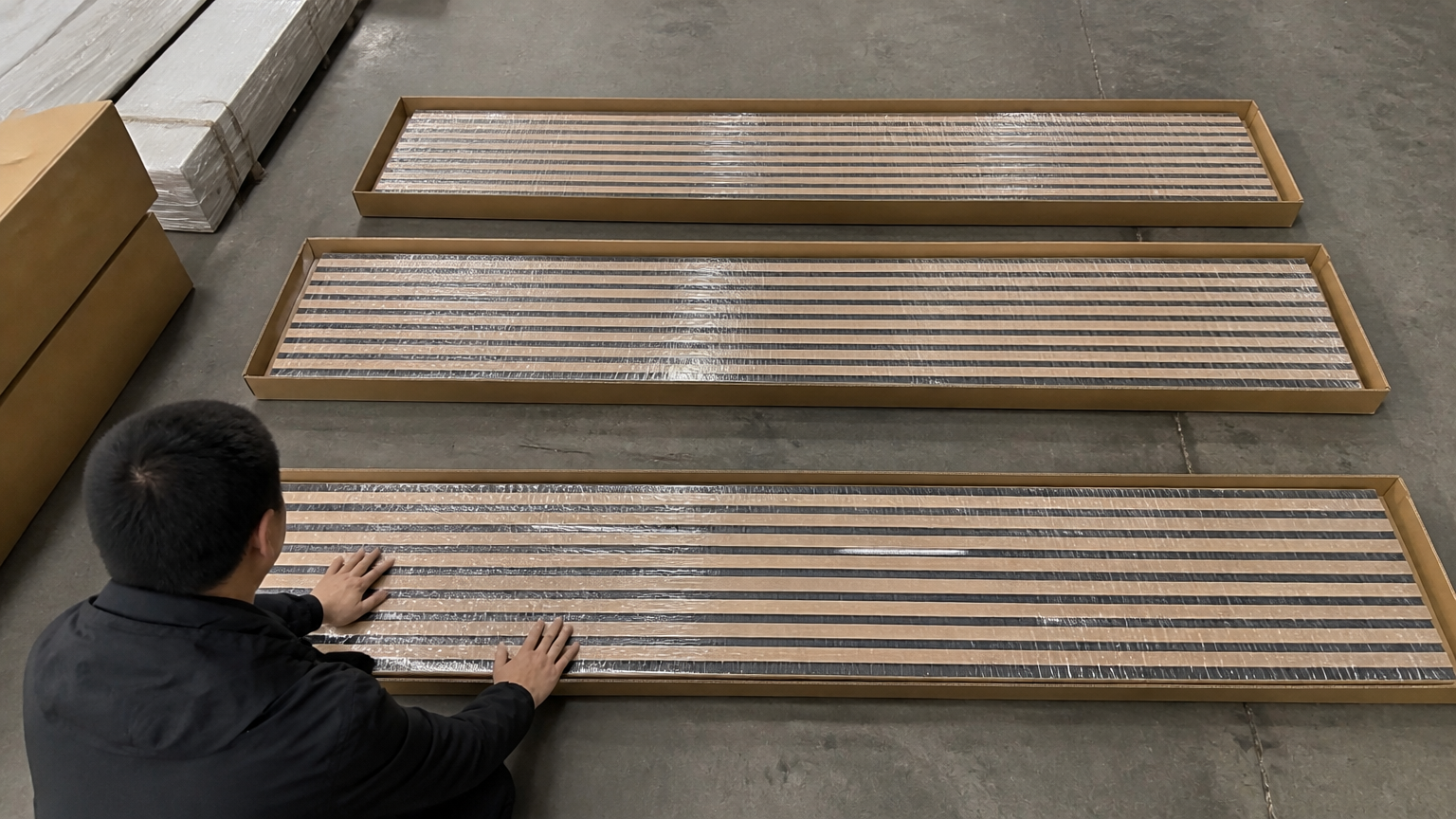
Before mass production starts, I confirm that the factory holds the correct sample set and current specification. During production, I check incoming veneer identification, sorting records, finish-batch control, grain orientation, panel layout, and segregation of nonconforming material. At pre-shipment inspection, selected panels are opened from identified cartons and laid side by side in the agreed orientation and viewing conditions.
The inspection record separates three questions:
| Inspection question | Evidence I retain |
|---|---|
| Does appearance fall within the signed range? | Sample comparison, panel layout, batch code, and decision |
| Does construction match the order? | Product identification and confirmation of veneer-faced slats on continuous black PET felt |
| Did logistics cause a problem? | Carton condition, panel condition, photos, and delivery records |
I use only the sampling level, defect definitions, tolerances, and numerical color criteria stated in the mutually signed specification. I do not create a ΔE limit after a disagreement begins. If the parties did not sign a numerical restriction, neither side should present one later as though it had always applied.
At receiving, I quarantine visibly damaged cartons, preserve labels, and sample across pallets and batch groups before installation. I acclimate or store panels only as the agreed product instructions require. Then I stage related panels together and conduct a trial layout under representative project lighting. Installers should follow sequence and room-allocation labels rather than opening cartons randomly.
If a deviation appears, I record the sample code, specification revision, batch, carton, panel position, viewing conditions, and photos before deciding disposition. This produces a fair discussion based on traceable evidence. It also protects acceptable natural variation from being confused with an unauthorized material change, finishing inconsistency, packing mix-up, or transit damage.
References
- USDA Forest Products Laboratory, Wood Handbook—Wood as an Engineering Material, FPL-GTR-282, 2021. ↩
- Architectural Woodwork Institute, AWI 100—Submittals: General Requirements. ↩
- Forest Stewardship Council, FSC-STD-40-004 V3-1: Chain of Custody Certification. ↩
Frequently Asked Questions
1. Can natural wood veneer panels be perfectly identical?
No. Natural veneer inherently varies in color, grain, figure, and response to finishing. I control the agreed range and placement rather than promise artificial uniformity.
2. Is one approved sample enough for a bulk order?
Usually not. I prefer a coded sample range that represents the intended appearance boundaries, supported by a signed specification and fixed viewing conditions.
3. Should buyers specify a ΔE limit?
Only when both parties choose the method, equipment, conditions, and limit and sign them into the specification. I never invent a color-difference value.
4. Why do batch and carton labels matter?
They keep related veneer and finish groups traceable through warehousing and installation, reducing accidental mixing and making any deviation easier to investigate.
5. When should receiving inspection happen?
I inspect before installation, while labels, cartons, and pallet relationships remain intact. Related panels should be trial-laid under representative project lighting before broad installation.
CTA
If you are preparing a bulk project, send NFDecor your panel construction, veneer reference, finish intent, room allocation, and draft acceptance plan. I can help turn them into a reviewable sample-to-shipment control package—without disguising natural variation or adding unsupported tolerances.